Walmart E-Bikes Clearance Sale: What to Know Before You Buy
Clearance e-bike listings at Walmart can look like a lucky shortcut into electric commuting, casual trail rides, or faster neighborhood errands. Yet a low sticker price is only part of the story, because battery quality, fit, warranty support, assembly needs, and return rules can change the value dramatically. This guide breaks down how Walmart e-bike clearance deals usually work, what specs matter most, and how to decide whether a markdown is genuinely worth your money.
Outline
This article begins with a practical outline of the buying process, then expands each part into a detailed guide for shoppers trying to separate a real bargain from an expensive compromise.
- How Walmart clearance pricing for e-bikes usually works
- Which specifications matter more than the discount itself
- The real costs that appear after checkout
- How to compare deals with more confidence
- Which riders are most likely to benefit from a clearance purchase
How Walmart E-Bike Clearance Sales Usually Work
When shoppers hear the phrase clearance sale, many imagine a dramatic last-chance event with massive savings on every model in sight. In reality, Walmart e-bike clearance pricing tends to be more uneven and more specific than that. Some markdowns come from seasonal turnover, some appear because a color or frame size is no longer being restocked, and others are tied to older inventory that needs to move before new products arrive. This matters because the reason for the markdown often tells you whether the bike is a hidden gem or simply an aging item with limited long-term support.
One important distinction is where the bike is actually being sold from. Walmart’s website can include products shipped by Walmart as well as listings from third-party marketplace sellers. That difference affects return procedures, warranty follow-through, assembly expectations, and the speed of customer service. An e-bike fulfilled directly by a large retailer may feel simpler to resolve if something goes wrong, while a marketplace listing can require more homework. Before getting attached to the discount, check who the seller is, who handles returns, and whether replacement parts are clearly available.
Clearance inventory can also vary sharply by location. A store may discount a floor model, a returned unit that was inspected and repackaged, or a bike that has been sitting through a full season. Online stock may disappear quickly, reappear unexpectedly, or differ from local inventory altogether. That is why a clearance e-bike search can feel a little like treasure hunting: one day you see three choices, the next day the shelf looks bare. The excitement is real, but so is the need for discipline.
It also helps to read pricing labels carefully. Retailers may use several terms that sound similar but do not mean the same thing:
- Clearance often signals limited remaining stock and a stronger push to sell
- Reduced price may simply reflect a temporary markdown
- Rollback can indicate a promotional price rather than end-of-line inventory
- Open-box or returned items may be discounted for condition reasons, not model age
Finally, remember that old inventory raises one special concern for electric bikes: battery age. Lithium-ion batteries gradually degrade over time, even when unused. A bike that sat boxed in a warehouse for a long period may still be fine, but the possibility is worth considering. Ask whether the battery is newly manufactured, whether the bike was stored assembled on the floor, and whether the return window gives you enough time to test charging performance. A lower price can be appealing, but the best clearance purchases are not just cheap; they are supported, inspectable, and realistic for the way you plan to ride.
Specs That Matter More Than the Discount Tag
The most common mistake in a clearance e-bike purchase is focusing on the markdown before understanding the machine. A bike discounted by a few hundred dollars can still be a poor fit if it lacks the battery capacity, braking power, or frame design you actually need. The smarter approach is to look past the sale label and evaluate the parts that shape everyday performance. That includes motor output, battery capacity, rider position, total weight, braking system, tire style, and intended use.
Battery capacity is one of the clearest examples of why sticker price alone can mislead. Many shoppers notice voltage first, but watt-hours tell a fuller story. Watt-hours are calculated by multiplying volts by amp-hours. For example, a 36V 10Ah battery delivers about 360Wh, while a 48V 10Ah battery provides about 480Wh. That difference can noticeably affect range. Budget e-bikes often advertise ranges that sound generous, but real-world performance depends on rider weight, terrain, wind, tire pressure, assist level, and how often you rely on the throttle. For many lower-priced models, practical mixed-use range may fall somewhere around 15 to 40 miles, not the most optimistic number shown in marketing.
Motor power also deserves context. A 250W or 350W motor may be adequate for flat neighborhoods and lighter riders, while a 500W motor usually feels more confident on hills or with cargo. More power is not automatically better if you only want gentle assistance on short trips, but too little power can make a bike feel sluggish the moment the road tilts upward. Think about your route, not just the spec sheet.
Other components matter just as much:
- Mechanical disc brakes are common on budget models and can be acceptable, but hydraulic disc brakes generally provide stronger modulation and easier control
- Wider tires improve comfort and stability, especially on rough pavement
- A step-through frame can be easier for frequent stops, errands, or riders with mobility limitations
- A suspension fork can smooth bumps, though low-end suspension is sometimes more about comfort than true trail performance
- Bike weight affects storage, stair carrying, and transport on car racks
Class also matters. In the United States, Class 1 e-bikes are pedal-assist only, Class 2 bikes include a throttle, and Class 3 bikes assist to higher speeds but may face extra local restrictions. If your goal is simple recreation on bike paths, the fastest option is not always the most useful. Local rules, trail access, and comfort level should shape the choice.
A quick comparison shows why specs matter. Imagine one clearance bike priced at $649 with a smaller battery, basic mechanical brakes, and no rear rack mounts. Another costs $799, but includes a larger battery, better tire width, and mounting points for cargo. For a rider using the bike for commuting or grocery runs, the second option may offer far greater value even though it costs more upfront. In short, discounts catch the eye, but design and hardware determine whether the bike stays enjoyable after the first week.
The Real Cost of Ownership After the Checkout Screen
A clearance e-bike can feel like a brilliant bargain until the rest of the bill arrives in pieces. This is where many first-time buyers get surprised. The sale price is only the beginning, and electric bikes often need a few practical add-ons before they become safe, useful, and comfortable. If you account for those costs in advance, you are far less likely to regret the purchase.
Assembly is one of the first hidden expenses. Some bikes arrive partially assembled, which sounds manageable until you are dealing with heavy frames, front wheels, handlebars, brake alignment, and accessories that need secure fitting. Riders who are comfortable with standard bike setup may handle it themselves, but others prefer a local bike shop. Depending on the area and the complexity of the bike, professional assembly or safety inspection can add meaningful cost. That may be money well spent, especially if you are unfamiliar with torque requirements or brake setup.
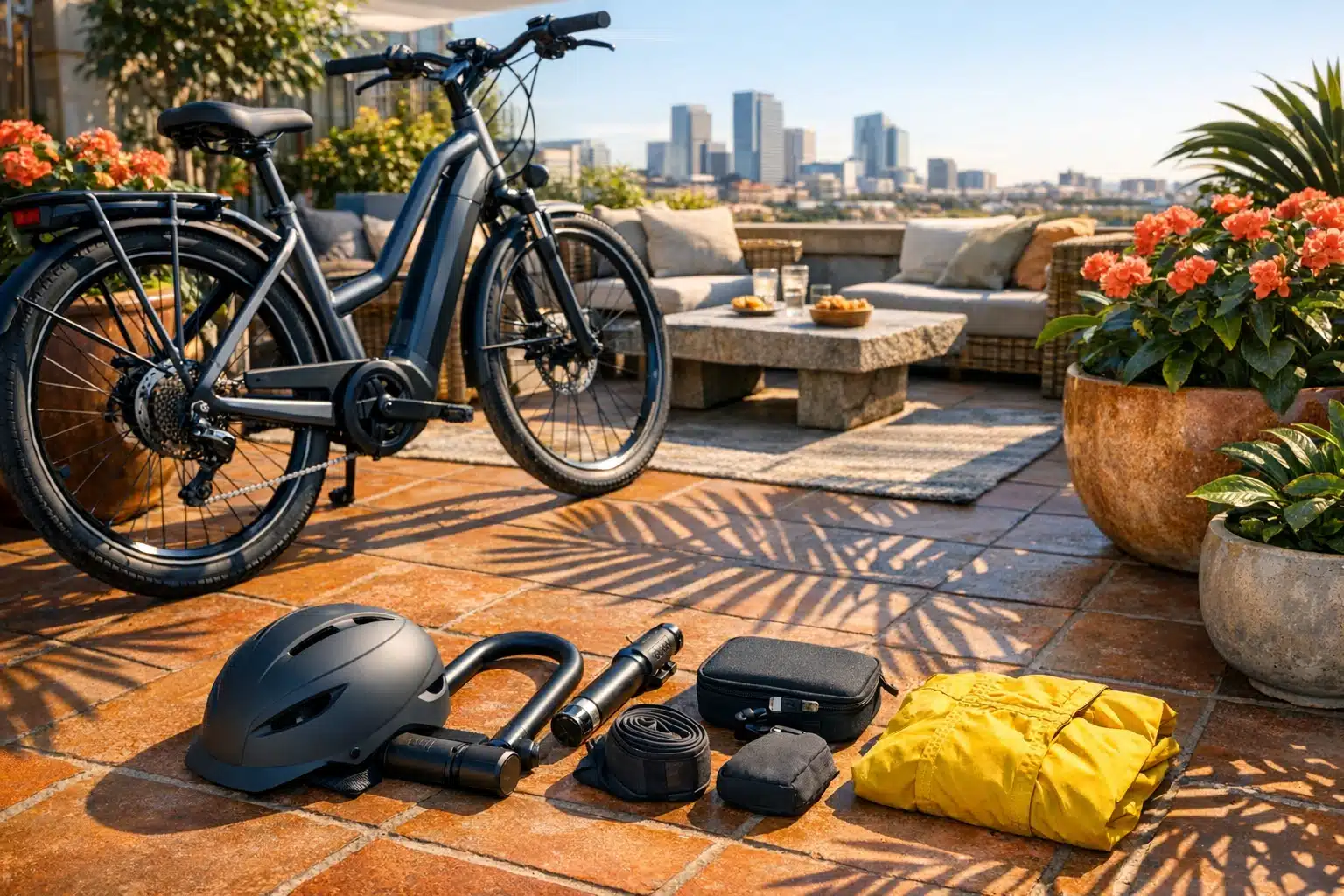
Then there are the accessories that transform an e-bike from a toy into transportation. A basic list often includes:
- A properly fitted helmet
- A sturdy lock, preferably stronger than the cable lock many new riders start with
- Front and rear lights if they are not included
- A pump, spare tube, and tire levers
- Fenders, rack bags, or baskets for commuting and errands
Maintenance matters too. E-bikes place extra stress on tires, drivetrains, and brake pads because they are heavier and faster than many ordinary bicycles. Even inexpensive ownership becomes less affordable if the local shop cannot source parts easily. Before buying, look for signs that replacement brake pads, tubes, tires, chargers, and batteries are obtainable. A bargain becomes awkward very quickly if a minor failure sidelines the bike for weeks.
The battery deserves special attention because it is both the heart of the e-bike and one of the most expensive replacement parts. Depending on brand, size, and availability, a replacement battery can cost several hundred dollars. On a deeply discounted model, that reality changes the math. If the bike costs only a little more than a future battery replacement, long-term value becomes questionable unless the rest of the package is strong and support is reliable.
Warranty and returns can be just as important as components. Read the return window, who pays return shipping, whether there is restocking language, and how warranty claims are handled. Also check whether local service is realistic. Some shops work on all bikes; others avoid certain direct-shipped electric models. In practice, the best clearance purchase is not the one with the lowest headline number. It is the one that still looks sensible after adding setup, safety gear, maintenance expectations, and the possibility of battery replacement in the years ahead.
How to Judge Whether a Clearance Deal Is Actually Good
A smart clearance purchase begins with comparison, not excitement. The markdown may be real, but the real question is whether the bike is competitive at its sale price compared with alternatives from other retailers, direct-to-consumer brands, local bike shops, or even the used market. That means building a simple evaluation method before clicking buy. You do not need a spreadsheet worthy of a laboratory, but a few grounded comparisons can save a great deal of frustration.
Start with the battery, because it influences both performance and value. Comparing watt-hours can give you a rough sense of how much energy storage you are getting for the money. Then compare motor power, bike class, brake type, tire width, included accessories, and stated weight limit. Next, examine the practical details: Does the frame style fit your body? Does the bike include lights, fenders, or a rack? Is there a clear manual, parts list, and charger specification? These items can move a deal from merely acceptable to genuinely useful.
Be cautious with original list prices. Retail pricing can make discounts look dramatic, but the strongest evidence of value is comparison against current market options, not only the crossed-out number above the sale price. A bike marked down from $1,099 to $699 may seem irresistible, yet a competitor at $799 might offer a larger battery, better support, and easier service access. Clearance is meaningful only when the final package compares well on total value.
A practical buyer checklist can help:
- Confirm whether the seller is Walmart or a third-party marketplace vendor
- Check battery watt-hours, not just voltage
- Read the return window before purchase, not after delivery
- Look for recent owner reviews that mention range, comfort, and reliability
- Search for replacement batteries and chargers before committing
- Verify whether a local shop will assemble or service the bike if needed
It also helps to compare against your actual use case. For quick neighborhood rides, a lighter and simpler bike may be better than a feature-heavy model. For commuting, cargo capability and battery size often matter more. For recreational paths, comfort, fit, and stable handling may outweigh raw speed. In other words, the best deal is the one that aligns with your route and routine.
There are a few red flags worth treating seriously. Vague range claims without battery details, missing warranty information, poor-quality product photos, or confusing seller identities are all reasons to slow down. So is a deal on a model with almost no service information available online. Clearance shopping should feel exciting, but not mysterious. If the basics are hard to verify, the discount may be compensating for uncertainty rather than delivering true value. A good e-bike deal survives close inspection; a weak one depends on impulse.
Conclusion: Who Should Buy a Walmart Clearance E-Bike and Who Should Pass
For the right rider, a Walmart clearance e-bike can be a practical entry point into electric cycling. If your goal is short commutes, neighborhood errands, weekend rides on paved paths, or simply testing whether e-bike life suits you, a discounted model can make a lot of sense. The strongest candidates are shoppers who understand the trade-offs, know which specifications matter, and are comfortable doing a careful review before buying. In that situation, clearance can lower the barrier to entry without automatically lowering satisfaction.
This kind of purchase is especially attractive for people who are value-conscious rather than spec-obsessed. A rider who wants moderate range, predictable terrain use, and basic utility may be perfectly happy with a simpler model if the battery, brakes, fit, and return terms check out. A clearance bike may also work well as a secondary household bike, a campus runabout, or a casual recreational option that does not need premium features.
On the other hand, some buyers should be more cautious. If you plan to ride steep hills daily, carry heavy cargo, replace a car for long-distance commuting, or expect easy access to specialized service, a deeply discounted budget model may not be the best match. The same goes for riders who need long range, top-tier component quality, or guaranteed long-term parts support. In those cases, paying more for a stronger platform can be the wiser financial decision over time.
Here is the simplest takeaway:
- Buy when the bike fits your body, route, and budget after factoring in accessories and setup
- Pause when the seller details, battery information, or warranty support feel unclear
- Skip the deal if the discount is the only thing that looks impressive
The target audience for a Walmart e-bike clearance sale is not just anyone chasing the cheapest number. It is the shopper who wants affordable electric mobility and is willing to read the fine print with calm attention. If that sounds like you, clearance can be a smart way to start riding sooner and spend more carefully. If not, there is no shame in walking away and waiting for a model that better matches your needs. In e-bike shopping, patience is sometimes the most valuable upgrade of all.