Train Trips for Older Seniors: A Practical Guide to Comfortable Rail Travel
Train travel can be one of the most practical and pleasant ways for older seniors to stay mobile, see family, or enjoy a long-awaited holiday without the strain that often comes with airports and highways. Stations are usually closer to city centers, seats allow more room to move, and the rhythm of the journey can feel calm rather than rushed. With thoughtful planning, rail trips can support comfort, independence, and confidence at every stage of the journey.
1. Article Outline and Why Train Travel Often Suits Older Seniors
Before moving into the details, it helps to see the road map for the article. This guide covers the core decisions that shape a smoother rail journey for older travelers:
- Why trains are often easier on the body than driving or flying
- How to plan routes, seats, and station support in advance
- What to consider for mobility, medication, meals, and rest
- How regional, intercity, high-speed, sleeper, and scenic trains compare
- Which practical habits help older seniors travel with less stress
For many older seniors, the appeal of train travel begins with what it avoids. There is no need to manage long hours behind the wheel, no pressure to watch traffic, and often less walking than a large airport requires. While every station and rail operator is different, many train systems offer features that support easier travel, including accessible boarding, elevators, station staff, seat reservations, and assistance services that can be booked ahead. Those details matter because comfort is not only about soft seats; it is about reducing friction throughout the day.
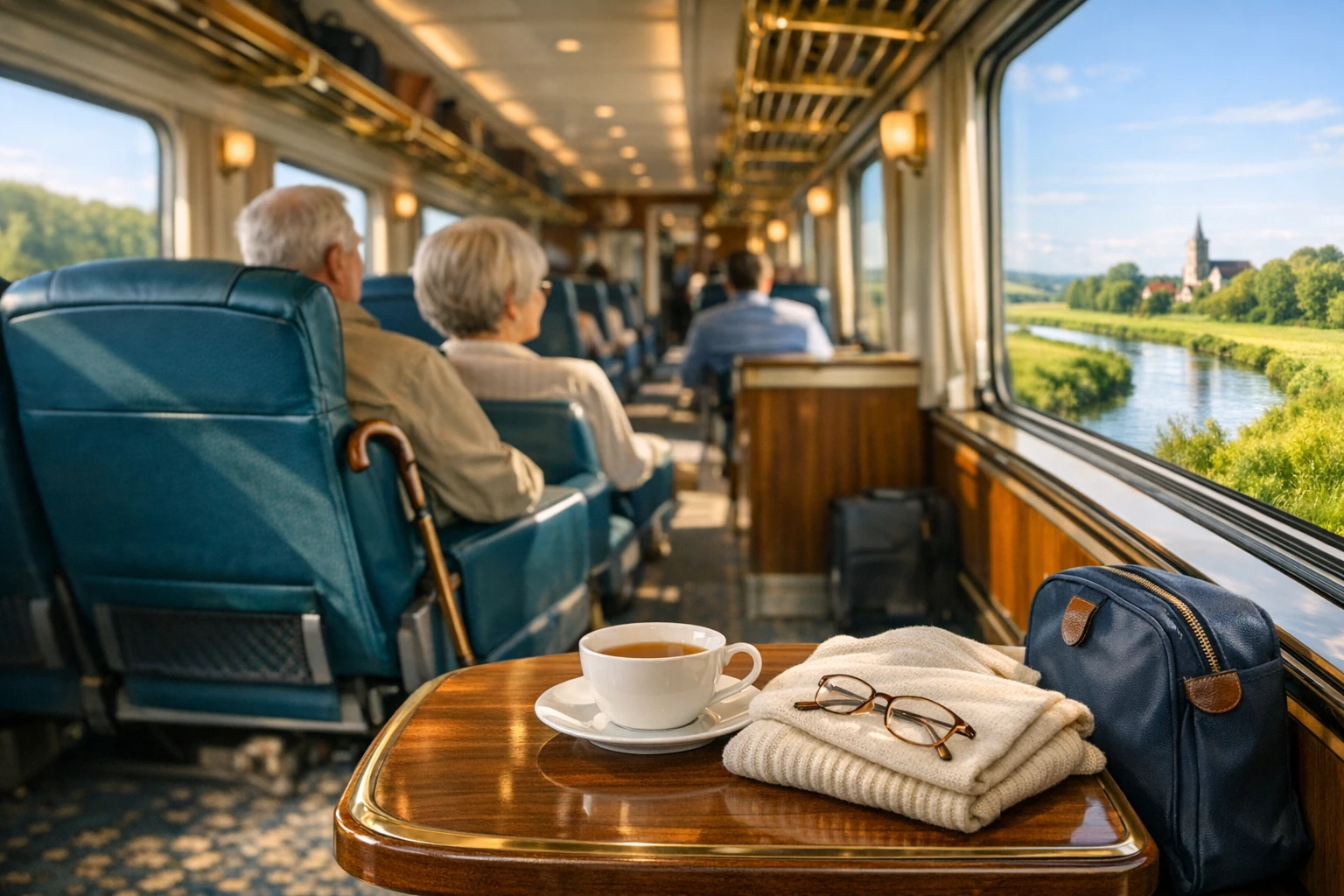
There is also a psychological advantage to rail travel. A train carriage often feels more settled than a terminal gate or a motorway service stop. You can stand up, stretch, look out the window, visit the café car on some services, or simply let the landscape unfold. Fields, rivers, industrial towns, city skylines, and small platforms pass by like chapters in a quiet travel diary. For older seniors who still want the pleasure of travel without the sharp edges of complicated logistics, that gentler pace can be a real benefit.
From a practical standpoint, rail can work especially well for journeys between major cities, visits to family members, multi-stop holidays, and scenic regional travel. In countries with mature rail networks, trains can connect central neighborhoods better than airports do, saving money and energy on transfers. Trains are also useful for travelers who no longer want to drive at night or for long distances. A couple in their seventies, for example, may prefer a daytime intercity service with reserved seats over a four-hour motorway drive in poor weather. The train does not solve every travel problem, but it often removes several at once.
The key, however, is not to assume that every train trip is automatically simple. Good outcomes usually come from careful planning, realistic pacing, and an honest look at personal needs. The sections that follow are designed to help older seniors make those decisions with clarity.
2. Planning the Journey: Booking, Timing, Seating, and Station Support
A comfortable train trip begins long before departure day. The booking stage is where older seniors can shape the journey to match their energy level, mobility needs, and budget. One of the smartest choices is to prioritize convenience over shaving every possible dollar off the ticket price. The cheapest fare is not always the best value if it comes with tight connections, a very early departure, or a crowded unreserved carriage.
When comparing routes, look first at total journey effort rather than just travel time. A direct train may be worth paying extra for because it removes the risk of missed connections, platform changes, and unnecessary rushing. If a change is unavoidable, a longer transfer window can make the trip far easier. Twenty extra minutes at a station can be more valuable than arriving slightly earlier but exhausted. Daytime services are often easier than late-night departures, especially for travelers who take medication on a schedule or prefer to avoid navigating unfamiliar stations after dark.
Seat selection deserves close attention. On many rail services, travelers can choose between window and aisle seats, forward-facing or backward-facing seats, quiet cars, tables, and upgraded classes. Each has advantages:
- An aisle seat can make standing up and walking easier
- A window seat offers more support for resting and a better view
- A table seat is useful for meals, cards, reading, or organizing medication
- A quiet carriage may suit travelers who tire easily from noise
- First or business class, where available, may provide wider seats and calmer boarding conditions
Station assistance can also make a major difference. Many rail operators provide help for boarding, alighting, or moving through the station for passengers with limited mobility. This service often needs to be requested in advance, so booking early matters. It is also wise to check whether the departure and arrival stations have elevators, ramps, accessible toilets, baggage carts, seating areas, and taxi stands close to the entrance.
Packing for rail travel should be lighter than many people expect. Unlike air travel, trains can feel more flexible, but luggage still has to be carried onto platforms and lifted into storage areas. A small rolling suitcase plus a shoulder bag or backpack is usually more practical than several smaller bags. Keep tickets, identification, medication, phone chargers, reading glasses, a water bottle, and a light layer of clothing in the smaller bag so they stay within reach.
Finally, leave room for the human side of travel. Build in extra time. Print key information even if you use a phone. Confirm departure platforms close to travel time, because they can change. Good planning does not remove every surprise, but it greatly reduces the number that can disrupt the day.
3. Comfort, Mobility, and Health Considerations During the Trip
Once the journey begins, the goal shifts from planning to maintaining comfort over time. For older seniors, that often means thinking less about speed and more about stamina. A two-hour train ride may feel easy, while a six-hour trip with poor hydration, awkward seating, and heavy luggage can become tiring. The good news is that rail travel usually allows more freedom of movement than a car or plane, and that flexibility can support physical comfort in meaningful ways.
Movement is one of the biggest advantages. On many trains, passengers can stand up, stretch near their seat, or walk the carriage when it is safe to do so. That can help reduce stiffness, particularly for travelers with arthritis, back pain, or circulation concerns. Comfortable clothing matters here. Shoes should be stable and easy to walk in, and layers are useful because train temperatures can vary. A light scarf, cardigan, or packable jacket often solves the problem better than carrying one heavy coat.
Health preparation should be simple and deliberate. Older seniors should keep essential medications in a personal bag rather than packed luggage and bring slightly more than needed in case of delays. A small pouch can hold tablets, a prescription list, emergency contacts, and any doctor-approved items such as pain relief, glucose supplies, or motion sickness medication. Snacks are equally important. Even on routes with catering, food choices may be limited or sold out.
- Bring water and sip regularly
- Pack easy snacks such as crackers, fruit, nuts, or sandwiches if appropriate
- Set reminders for medication times on a watch or phone
- Use station or onboard toilets before discomfort becomes urgent
Mobility aids deserve practical planning as well. Canes, folding walkers, and other approved aids can often be accommodated, but travelers should verify space and boarding arrangements in advance. If lifting luggage overhead is difficult, use lower storage areas where available or ask for assistance. Pride should never outweigh safety. A strained shoulder at the start of a journey can overshadow the entire trip.
There is also the question of energy management. Older seniors often enjoy travel more when they avoid over-scheduling the arrival day. If possible, choose accommodation near the station or arrange a short taxi ride instead of relying on multiple local transfers. Think of the trip in stages: getting to the station, boarding, riding, arriving, and settling in. That mindset turns a long day into manageable pieces.
And then there is the pleasure of the ride itself. A train seat by the window can become a small observatory, a place to watch the world change gradually. Unlike air travel, which erases the land below into clouds and distance, rail reminds you that every destination is connected by real places and real people. That feeling can make the journey less like lost time and more like part of the holiday.
4. Comparing Train Types and Choosing the Right Trip Style
Not all train journeys feel the same, and older seniors benefit from matching the trip type to their priorities. Some travelers want speed. Others want scenery, fewer changes, lower prices, or overnight convenience. Understanding the main categories of rail service can help avoid disappointment and lead to better decisions.
Regional trains are often the most affordable and the most locally useful. They connect smaller towns and suburban areas, making them ideal for short visits, flexible day trips, and travel to places not served by faster lines. Their downside is that they may have more stops, simpler seating, and less luggage space. For an older senior visiting family one town over, that may be perfectly fine. For a longer trip with heavy bags, it may feel tiring.
Intercity and high-speed services are usually better for medium and long distances. They tend to offer more comfortable seating, clearer reservations, and faster travel times between major cities. High-speed rail can reduce an all-day drive to a manageable train ride, which is a major benefit for older travelers who value energy conservation. However, busy high-speed stations can feel hectic, so it helps to arrive early and know the platform procedures. In some places, these services also have stricter baggage expectations or more competitive seat pricing.
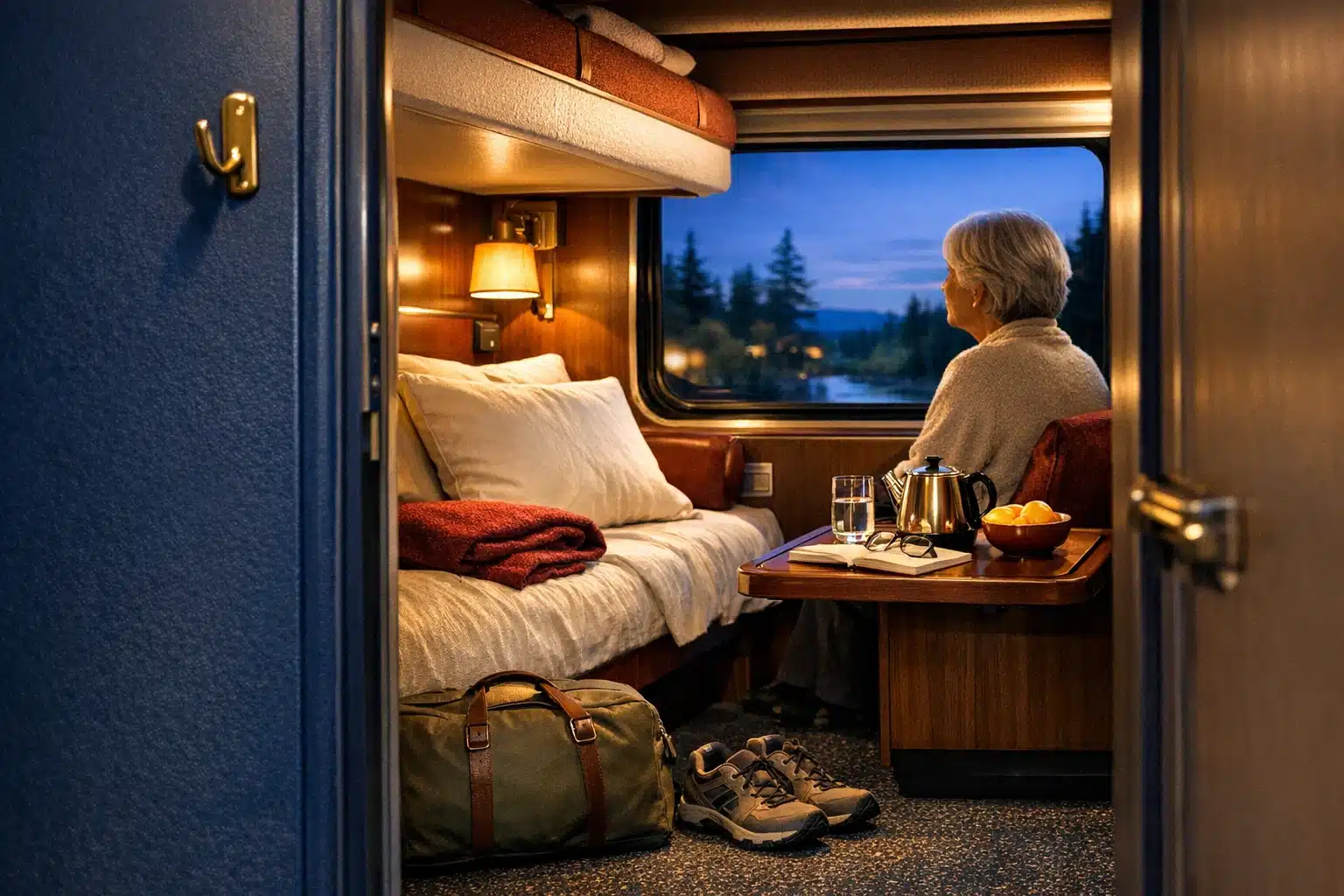
Sleeper trains suit a different kind of traveler. They can save a hotel night and turn distance into rest, but they are not automatically the easiest option for everyone. For some older seniors, climbing into bunks, moving in narrow compartments, or sleeping in motion may be uncomfortable. For others, especially on private cabin services, sleeper travel offers privacy, convenience, and a memorable old-fashioned charm. The best choice depends on sleep quality, mobility, and how much complexity feels acceptable.
Scenic trains, heritage railways, and leisurely touring routes are often less about transportation and more about experience. These journeys can be wonderful for retirees who want the trip itself to be the centerpiece. Wide windows, dining service, and slower pacing may create a richer day than a faster line. The trade-off is cost, and in some cases these services are better suited to special occasions than regular travel.
When comparing options, older seniors may find this simple framework helpful:
- Choose regional trains for short, practical, flexible trips
- Choose intercity or high-speed trains for efficient city-to-city travel
- Choose sleeper trains only if overnight travel genuinely improves comfort
- Choose scenic routes when the journey is part of the reward
There is no universal best train. The right train is the one that respects your pace, your body, and your reason for traveling. A retired solo traveler heading to a museum city may prefer a direct intercity service with reserved aisle seating. A couple celebrating an anniversary might choose a scenic route with dining service and an overnight stay. The details change, but the principle remains the same: fit the travel style to the traveler, not the other way around.
5. Conclusion: Smart, Gentle, and Rewarding Rail Travel for Older Seniors
For older seniors, train travel can be more than a practical alternative to driving or flying. At its best, it offers a way to keep exploring without feeling pushed, rushed, or worn down by the process. The strongest rail journeys are rarely the most ambitious ones. They are the ones planned with honesty: enough time, manageable luggage, comfortable seating, realistic connections, and support arranged in advance when needed.
This is especially important because travel changes with age, but it does not have to shrink into something joyless. Many older adults remain active, curious, and eager to visit new places, reconnect with family, attend celebrations, or finally take the trips that work and family life once delayed. Trains can meet that stage of life well because they combine movement with breathing room. You are getting somewhere, but you are not trapped in the narrow logic of a departure gate or the concentration of a long drive.
The most useful habits are also the simplest. Travel at a comfortable hour. Reserve seats when possible. Keep essentials close. Ask for assistance before you need it. Break long journeys into stages if that makes arrival easier. If one route looks elegant on paper but exhausting in real life, choose the steadier option. Good travel is not a test of endurance.
A practical final checklist may help:
- Book direct routes when possible
- Request accessibility or boarding help in advance
- Carry medication, documents, water, and chargers in one easy-to-reach bag
- Wear supportive shoes and layered clothing
- Allow generous time for stations, transfers, and arrival
- Choose the service type that matches your comfort, not just your budget
For many older seniors, the real promise of rail travel is dignity. It supports independence while still allowing room for help. It opens the door to solo adventures, shared holidays, family visits, and scenic escapes without demanding extreme stamina. The landscape rolls by, the timetable carries the burden of distance, and the traveler is free to look outward again. That is a quiet kind of luxury, and for many people in later life, it is exactly the right one.