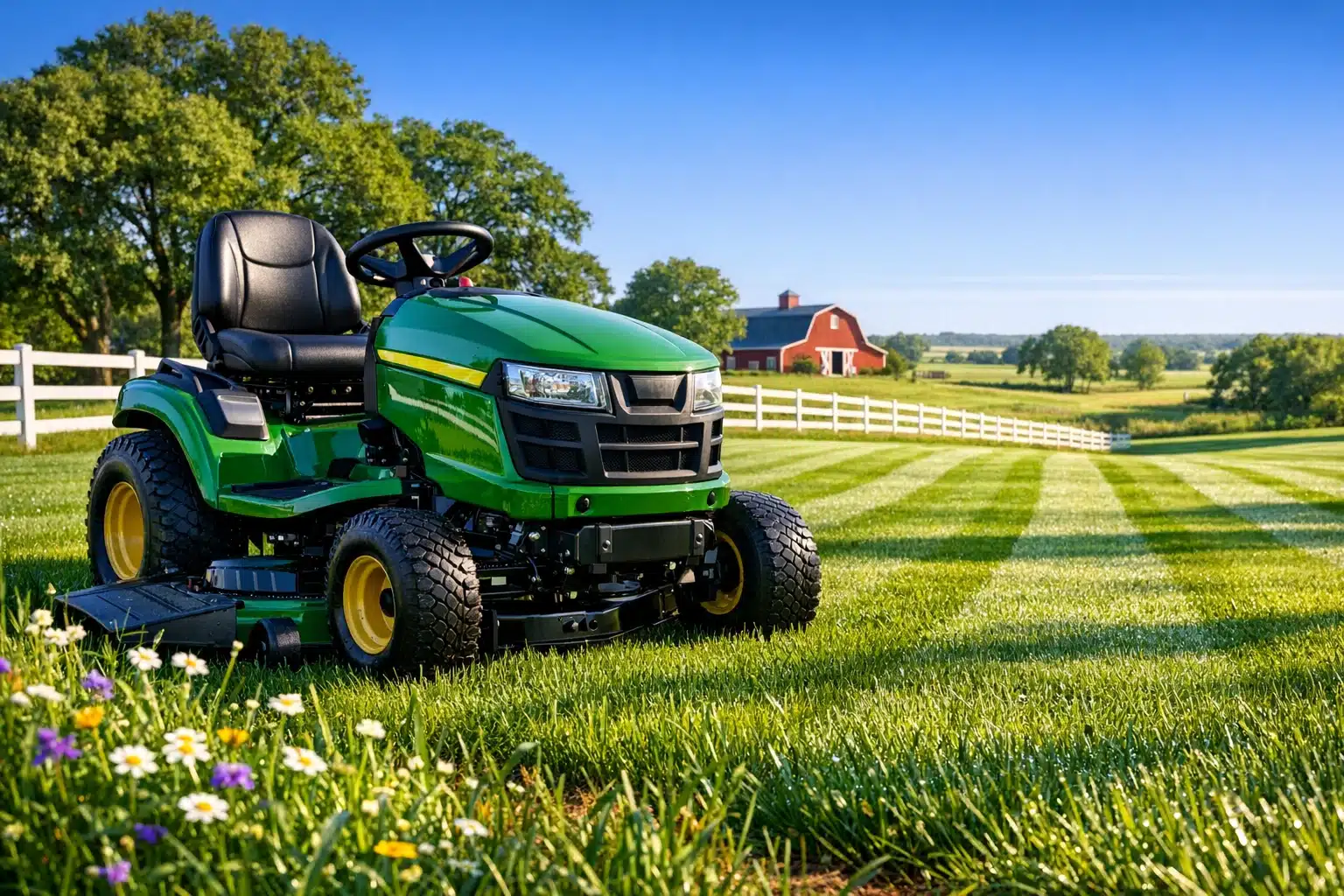
Tractor Supply Is Clearing Out These Lawn Mowers
Buying a lawn mower is rarely a casual errand, because one machine can shape every weekend of the growing season. Tractor Supply often attracts attention when inventory shifts and certain mower models start appearing with reduced pricing, especially around seasonal transitions. For homeowners, hobby farmers, and acreage owners, that moment can open the door to better equipment at a more comfortable cost. The catch is simple: a clearance sticker saves money only if the mower actually fits the yard, the workload, and the person using it.
This independent article follows a simple outline so readers can move from broad strategy to practical decision-making without guesswork.
- How mower clearance cycles usually work and why timing influences value.
- Which mower types are most likely to be discounted and who they suit best.
- The features that deserve close comparison before price becomes the deciding factor.
- The inspection steps that can help buyers avoid hidden problems on a reduced-price machine.
- A final summary aimed at homeowners and property owners trying to choose wisely.
How Tractor Supply Clearance Timing Usually Works
When shoppers hear that Tractor Supply is clearing out lawn mowers, the phrase can sound dramatic, as if every aisle suddenly turns into a bargain hunt. In reality, clearance usually follows a predictable retail rhythm. Seasonal equipment moves in waves, and lawn mowers tend to be marked down when stores need space for incoming inventory, when a model year changes, or when a particular size or configuration has not sold as quickly as expected. That means timing matters almost as much as the product itself.
Many mower discounts appear toward the end of peak mowing season, often in late summer or early fall, when retailers begin looking ahead to snow equipment, heating products, holiday merchandise, or next year’s floor layout. Some markdowns can also show up in spring if a certain model, deck width, or power source is overstocked. Clearance selections are rarely identical from one location to another. A rural store with more acreage customers may have a different mix than a suburban location where walk-behind models sell faster.
Several factors often explain why a mower lands in the clearance group:
- A newer version has arrived with minor updates.
- The store has extra inventory in a specific deck size.
- A display unit needs to be moved to free floor space.
- A seasonal reset changes which outdoor equipment gets priority.
- A niche model appeals to fewer shoppers than expected.
This is why shoppers should resist one common mistake: assuming every reduced mower is an exceptional deal. A markdown on the wrong machine is still the wrong machine. If a riding mower is too large for a compact yard, the lower price does not erase the storage headache. If a budget push mower struggles on thick grass, the savings may disappear in frustration and maintenance.
It also helps to remember that clearance pricing is only part of the full cost. Delivery fees, assembly, replacement blades, oil, battery care, fuel use, or bagger attachments can change the value equation quickly. A mower that is reduced by a few hundred dollars may still cost more to own over time than a simpler machine that matches the property better. Think of clearance less like a treasure chest and more like a timed filter: it narrows the field, but it does not make the decision for you. Smart buyers use the discount as an opening move, not the whole game.
Which Lawn Mowers Are Most Likely to Be Marked Down
Not every mower category shows up on clearance in the same way. Some machines move quickly and only get modest price cuts, while others sit longer because they serve a narrower type of customer. Understanding the common categories can help buyers focus on the deals that make sense instead of circling every shiny hood in the parking lot.
Walk-behind mowers are often the most visible markdowns, especially gas push mowers, self-propelled models, and selected battery units. These are popular with homeowners who have smaller lots, usually up to about one-quarter acre for basic push mowing and up to around one-half acre for self-propelled use, depending on terrain and grass thickness. A 20-inch to 22-inch deck is common in this category. When discounts appear, they may be attached to leftover inventory in a certain engine size, battery platform, or feature set such as rear-wheel drive, bagging, or mulching capability.
Riding lawn tractors are another category to watch, particularly 42-inch and 46-inch deck models. These machines appeal to buyers with larger lawns, often from about one acre upward, where walking behind a mower starts to feel like a weekly endurance event. Lawn tractors are versatile and familiar, which makes them a frequent target during end-of-season promotions. They tend to suit open properties well and can sometimes support attachments, making them useful beyond mowing.
Zero-turn mowers may also appear in clearance groups, though usually in a narrower range of models. These are attractive for properties with many obstacles, such as trees, landscaping beds, fence lines, or outbuildings. Their tight turning ability can save time, and faster mowing speeds often appeal to acreage owners. Still, zero-turn machines are not automatically the right answer for every buyer. They can be more expensive, may feel less intuitive to first-time users, and are often overkill for a small, simple yard.
A quick matching guide can help narrow the field:
- Small, mostly flat yard: push mower or compact self-propelled mower.
- Medium yard with slopes or thicker growth: stronger self-propelled model.
- One acre or more with open space: riding tractor.
- Large yard with many turns and obstacles: zero-turn mower.
Battery-powered models deserve special mention because they attract buyers who want less noise, less routine engine maintenance, and easier startup. They can be excellent for smaller properties, but shoppers should check battery voltage, run time claims, and charger compatibility carefully. A clearance battery mower is more appealing when the battery system is still active and replacement packs are easy to buy.
The key idea is simple: the mower most likely to be discounted is not always the mower most likely to serve you well. Clearance can widen your options, but yard size, terrain, and mowing frequency still decide what belongs in your cart.
What to Compare Before Price Wins the Argument
A lower price can pull attention like a magnet, but a mower should be judged by the work it needs to do. This is where careful comparison matters. Two machines can sit in the same clearance row and look similar from a distance, yet one may be dramatically better suited to your property, your storage space, and your comfort level during a long mowing session.
Deck size is one of the first numbers to compare. For walk-behind mowers, cutting widths around 20 to 22 inches are common and practical for smaller yards. On riding mowers, decks often begin around 42 inches and move upward. A larger deck can reduce mowing time, but it also needs more room to maneuver, more storage space, and enough gate clearance if the mower must pass into a fenced area. Bigger is efficient only when the property layout supports it.
Power source is the next major decision. Gas mowers remain common because they offer long run times and familiar refueling, especially useful for larger jobs. Battery mowers attract buyers who want quieter operation and less routine maintenance. For battery units, shoppers should compare amp-hours, estimated run time, recharge speed, and whether the same battery works with other tools. For gas units, it helps to look at engine reputation, starting ease, fuel tank access, and how simple it is to reach common service points.
Transmission and traction matter more than many first-time buyers expect. On self-propelled walk-behind mowers, front-wheel drive can feel nimble, while rear-wheel drive often performs better on slopes and uneven ground. On riding mowers, hydrostatic transmissions are popular because they provide smoother speed control than traditional stepped gear setups. If your yard includes hills, ditches, or rough patches, a test drive or at least a close look at tire size and tread pattern can reveal a lot.
Useful comparison points include:
- Mulching, bagging, and side-discharge options.
- Seat comfort and vibration on riding models.
- Turning radius and steering feel.
- Blade engagement system and control layout.
- Deck washout ports and cleaning access.
- Availability of replacement parts and service support.
Durability should also stay on the checklist. A stamped deck may be perfectly adequate for many homeowners, while heavier-duty construction may benefit buyers with rougher terrain or frequent mowing demands. Some shoppers fixate on horsepower alone, but raw power is only one piece of the puzzle. Build quality, design, and ease of maintenance usually matter more over several seasons.
Think of it like choosing boots for a long trail. A discounted pair that pinches your feet is still a bad buy. In the same way, a mower should match the shape of your property and the rhythm of your routine, not just the excitement of the moment.
How to Inspect a Clearance Mower and Avoid an Expensive Mistake
Once a mower looks promising on paper, the smartest move is to inspect it like a buyer, not admire it like a spectator. Clearance items can include unopened units, assembled floor models, older stock, or equipment with cosmetic wear from being displayed. That does not automatically make them risky, but it does mean buyers should slow down and look beyond the price tag.
Start by asking a simple question: what kind of clearance unit is this? A factory-sealed mower in a box is very different from a floor display that has been rolled, touched, sat on, and perhaps started for demonstration. If the mower has been assembled, ask whether it has ever been fueled, whether it has operating hours, and whether the battery on electric models has been charged regularly according to manufacturer guidelines. A machine can be “new” in store terms while still having a little wear from display handling.
Physical inspection matters. Look at the deck for dents, cracks, chipped paint, deep rust, or signs of impact. Check the blades for damage and confirm they are installed properly. On riding mowers, inspect the tires for dry cracking or uneven wear, and make sure the seat, steering components, and controls feel secure. For battery models, ask about battery age, storage conditions, and replacement cost. If a mower has sat long enough for its power pack to degrade, a cheap sticker can become an expensive surprise.
Important checkpoints include:
- Manufacturing date or approximate stock age.
- Warranty coverage and whether clearance affects it.
- Return policy for assembled or outdoor power equipment.
- Condition of belts, cables, and visible wiring.
- Availability of manuals, keys, chargers, and accessories.
- Local service options for warranty or repair work.
Do not skip the practical questions either. Can you transport it safely? Is delivery available? Does assembly cost extra? Will the mower fit through your gate, into your shed, or onto your trailer? A 46-inch riding mower may look like a smart deal until you realize the storage door opening is narrower than the machine. That is the kind of problem that arrives home before the mower ever cuts grass.
Buyers should also think about maintenance support. Replacement blades, filters, belts, batteries, and tires are the quiet backbone of long-term ownership. If parts are difficult to source, even a heavily discounted mower can become inconvenient. The best clearance purchase is not the machine with the boldest markdown card. It is the one that still has a healthy life ahead of it, clear support options, and no hidden compromises waiting under the hood.
Conclusion for Homeowners and Property Owners Shopping the Clearance Rack
If you are the kind of shopper drawn to a clearance sign for good reason, this is the main takeaway: buying a lawn mower at Tractor Supply can be a smart move when you treat the discount as a bonus rather than a shortcut. The right machine should fit your yard, your storage situation, your physical comfort, and your willingness to handle maintenance. Once those basics are settled, the reduced price becomes meaningful instead of merely tempting.
For many homeowners with smaller yards, a walk-behind mower will still offer the best balance of cost, storage convenience, and control. If the property is uneven or the grass gets thick fast, stepping up to a self-propelled unit can make mowing far less tiring. Buyers with an acre or more may find better value in a riding mower, especially if mowing time has become a recurring weekend drain. Zero-turn models can be excellent for larger, obstacle-filled spaces, but they deserve a careful look because speed and maneuverability only matter when the layout truly rewards them.
A practical shopping filter looks like this:
- Measure the yard and note slopes, gates, and obstacles.
- Set a total budget, including accessories and maintenance items.
- Choose the mower category before comparing sale tags.
- Inspect condition, warranty, and parts support carefully.
- Walk away if the machine solves the store’s inventory problem more than your mowing problem.
That final point matters. Clearance shopping can create the feeling that a decision must happen instantly, as though hesitation might make the opportunity vanish in a puff of summer dust. Sometimes acting quickly is reasonable, but rushed buying is how shoppers end up with a mower that is oversized, underpowered, or awkward to own. A little patience often saves more than the markdown itself.
For the target audience here, whether you maintain a tidy suburban lawn, a broad rural yard, or a mixed-use property with a few rough edges, the best result is not simply spending less. It is buying once, buying appropriately, and mowing with fewer regrets when the grass starts climbing again. A good clearance find should feel less like a gamble and more like a well-timed decision that keeps your property in shape without cutting into your budget any more than necessary.