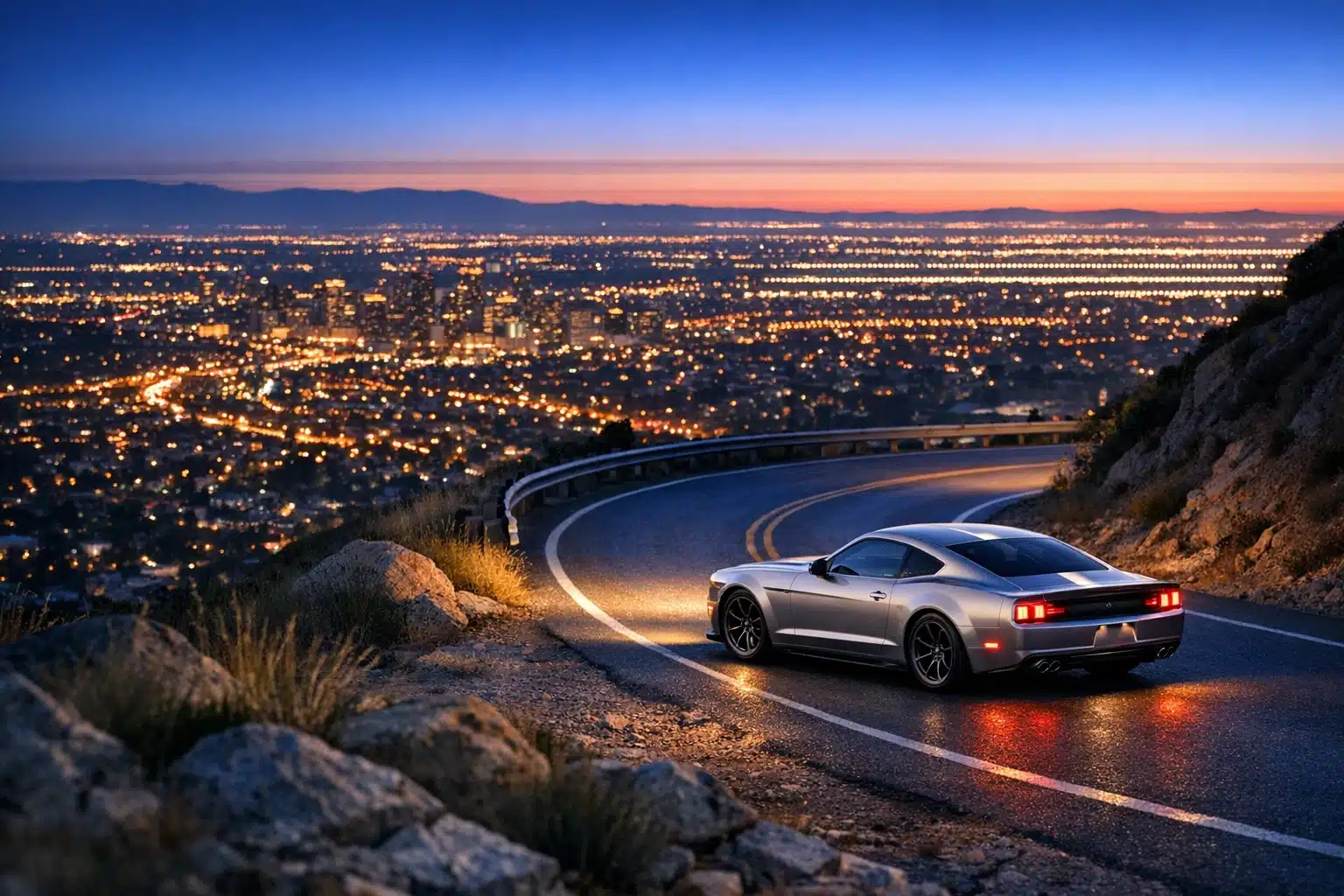
Could the 2026 Chevelle SS 572 Return in Style?
Muscle car rumors travel fast, and few names spark instant nostalgia like the Chevelle SS. Talk of a 2026 Chevelle SS 572 matters because it sits at the crossroads of heritage styling, modern performance, and a market now crowded with revivals, EVs, and high-priced collectibles. For longtime fans, the question is not only whether Chevrolet could revive the badge, but whether it could do so without turning it into a costume. That tension makes the idea worth a closer look.
Outline: • Why the Chevelle name still carries emotional and market value • What the SS 572 label really implies in mechanical terms • Whether Chevrolet has a realistic platform and business case for a revival • How design, technology, and competition would shape the final car • What enthusiasts and buyers should realistically expect from any return wearing this famous badge
1. Why the Chevelle Name Still Has Power
The Chevelle is not just another retired model name from Detroit’s back catalog. It is one of those rare badges that still sounds fast even when spoken quietly. Produced from 1964 through 1977, the Chevrolet Chevelle evolved from a midsize family car into one of the most recognizable muscle car names of its era. The strongest emotional pull comes from the late 1960s and especially the 1970 model year, when the SS 454 became a symbol of the horsepower wars. That car, particularly in LS6 form, was rated at 450 horsepower in gross terms, a number that still echoes through auction listings, garage conversations, and late-night forum debates.
What makes the Chevelle so relevant in 2026 is not merely nostalgia. It occupies a sweet spot in American performance history. It was larger and more substantial than some pony cars, but more stylish and youthful than the average midsize sedan of its day. In modern terms, that gives it room to be imagined as a powerful coupe, a premium grand tourer, or even a limited-production halo car. The name can stretch without breaking, and that is a valuable trait in a market where brand memory matters almost as much as engineering.
There is also the cultural side. The Chevelle has survived because it never left the enthusiast imagination. It shows up at auctions, in restorations, in restomods, and in countless digital renderings. Its shape is simple in the best way: long hood, short deck, strong shoulders, and a stance that looks ready to lunge even at a standstill. Unlike some classics that belong mostly to collectors, the Chevelle belongs to several tribes at once. It appeals to factory-correct purists, drag-racing traditionalists, pro-touring builders, and younger fans who first met it through videos, games, or social media.
Several factors explain why the name still resonates: • historical significance in the golden age of muscle cars • visual identity that remains instantly recognizable • a strong aftermarket and restoration scene • crossover appeal between collectors and modern performance fans. That last point matters because a revival only works when a badge speaks to more than one generation. The Chevelle does. It reminds older enthusiasts of carburetors, chrome, and Saturday nights at the strip, while younger buyers see a shape that feels authentic rather than manufactured by committee.
If Chevrolet ever brought the name back, it would not be reviving a forgotten footnote. It would be reopening a conversation that never really ended. That is why rumors around a 2026 Chevelle SS 572 gain traction so easily. The badge still carries the weight of memory, but it also hints at unfinished business. In a time when many performance cars are shrinking, electrifying, or disappearing, the Chevelle name offers a different fantasy: a broad-shouldered machine with old-school swagger and just enough modern discipline to make the fantasy road legal.
2. What “SS 572” Really Means in Performance Terms
The phrase “Chevelle SS 572” sounds dramatic because every part of it carries a specific kind of weight. “SS” stands for Super Sport, one of Chevrolet’s most recognizable performance labels. “572” points to engine size, specifically 572 cubic inches, which equals roughly 9.4 liters. In Chevrolet performance culture, that number is closely associated with big-block crate engines such as the ZZ572 family. Depending on the exact version, Chevrolet Performance has offered 572-based crate engines with output figures around 620 horsepower and about 650 lb-ft of torque. Those are headline numbers, but the story is more interesting than the headline.
A 572-cubic-inch V8 represents abundance in mechanical form. It is the kind of engine specification that makes subtlety leave the room. Compared with the legendary 1970 Chevelle SS 454 LS6, a 572 suggests even more displacement, more low-end torque, and an even stronger nod to brute-force tradition. Yet building a true factory 2026 car around such an engine would be far more complicated than simply dropping a crate motor into a retro body shell. Modern emissions rules, crash structures, packaging constraints, thermal management, fuel economy expectations, and onboard electronics all reshape what is possible.
That creates an important distinction between fantasy and feasibility. In a custom or low-volume build, a 572 makes perfect symbolic sense. It is theatrical, mechanically honest, and deeply rooted in American V8 culture. In a mass-produced, emissions-certified new car, it becomes a much harder sell. Large displacement naturally aspirated engines are glorious, but they are also heavy, thirsty, and increasingly out of step with the industry’s broader compliance pressures. Even brands that still trade on performance are relying more on supercharging, turbocharging, hybrid assistance, and modular engine families rather than giant big-block statements.
There is also the matter of balance. A 572 big-block would likely deliver immense straight-line appeal, but modern buyers and reviewers expect more than quarter-mile charisma. A revived Chevelle would be judged on braking, steering, ride quality, heat management, cabin refinement, and track endurance. That means the rest of the car would need to rise to the engine’s level. Key engineering challenges would include: • front-end weight distribution • cooling capacity for sustained performance • transmission durability under high torque loads • tuning the chassis so the car feels planted rather than nostalgic in all the wrong ways.
Against modern Chevrolet engines, the 572 idea becomes even more intriguing. A supercharged 6.2-liter V8 such as the LT4 has already shown how a smaller displacement engine can produce extraordinary output with modern packaging and emissions strategies. That makes a true factory 572 harder to justify, even if it sounds more romantic. So when people say “2026 Chevelle SS 572,” they are often describing an emotional specification as much as a practical one. It is less a product code than a promise of character: massive torque, unapologetic sound, and the kind of power delivery that feels like a freight train in work boots. If the car ever appears, that character will matter as much as the exact engine architecture.
3. Could Chevrolet Realistically Launch It in 2026?
This is where excitement meets the spreadsheet. As of now, there has been no official General Motors announcement confirming a 2026 Chevrolet Chevelle SS 572. That alone does not kill the idea, but it does force the discussion into a more realistic lane. Reviving a classic badge is not simply a matter of desire. It requires a platform, a manufacturing plan, a pricing strategy, regulatory compliance, and a believable reason to exist in a market that has changed dramatically since the original Chevelle era.
The performance landscape offers both warning signs and opportunities. The Ford Mustang has remained in production and continues to prove that there is still demand for coupes with heritage appeal. Dodge has used retro styling and bold branding to keep interest high, even as its muscle-car formula transitions into a new phase. Chevrolet, meanwhile, ended production of the sixth-generation Camaro after the 2024 model year. That move left a gap in its lineup and sparked immediate speculation about what, if anything, could fill the emotional space once occupied by affordable Chevrolet performance coupes.
On paper, the Chevelle could serve as a halo model rather than a direct Camaro replacement. A halo car does not need massive volume if it supports brand identity, attracts attention, and creates showroom energy. But the economics still matter. Tooling a unique body, certifying a specialty powertrain, and building a niche product at a price enthusiasts can tolerate is difficult. If the car were positioned too cheaply, it could be unprofitable. If it were positioned too high, it could become a collectible first and a driver’s car second.
The most realistic pathways would probably involve platform sharing or limited production. Chevrolet could, in theory, use an existing architecture and wrap it in distinctive styling, much like automakers have often done when creating special editions or premium variants. A low-volume run would also make more sense than a broad mainstream relaunch. The business case would improve if the car could borrow major structural and electronic systems rather than being engineered from scratch. Important questions would include: • what platform could support the proportions enthusiasts expect • whether a V8-focused car fits future emissions targets • how much buyers would pay for heritage without full exotic-car pricing • whether the car would be global, regional, or strictly a North American statement.
There is another wrinkle: much of the recent “Chevelle SS 572” conversation online has blurred the line between official product rumors and custom-built machines. Some enthusiasts are actually thinking of high-end retro builds or continuation-style interpretations rather than a GM showroom model. Those cars can exist more freely because they are not burdened by the same mass-market obligations. In that sense, the Chevelle may already be “returning” in spirit through the custom world.
So could Chevrolet launch a 2026 Chevelle? Technically, yes. Could it do so as a factory 572-powered big-block muscle coupe in the old-school mold? That is much less likely. The strongest real-world case would be a limited-production performance car that uses modern engineering under retro-inspired sheet metal and lets the badge do what it has always done best: make people look twice, then start talking.
4. What a Stylish Return Would Need to Get Right
If a new Chevelle ever appears, styling will not be a side note. It will be the battlefield. Retro design can revive a legend or trap it in parody, and the difference is usually found in restraint. A successful 2026 Chevelle would need to borrow the spirit of the 1968 to 1970 cars without becoming a museum display on modern wheels. That means the proportions matter more than the decorations. A strong hood line, wide rear haunches, clean surfacing, and a planted stance would carry more emotional truth than oversized badges or a forced imitation grille.
The best revivals understand a simple rule: memory is sharper than imitation. The 1970 Chevelle is remembered for muscular simplicity, not visual clutter. A modern interpretation could echo that with squared confidence, a subtle coke-bottle profile, and a front end that feels assertive without relying on cartoon aggression. LED lighting, larger wheels, and safety-driven body dimensions would naturally change the shape, but the car should still look like it was drawn with one confident stroke instead of twenty nervous revisions.
Inside, the same balance would matter. Buyers drawn to a Chevelle revival are unlikely to want a bare-metal time capsule, but they also would not want an anonymous digital cockpit that could belong to any crossover. The ideal cabin would blend familiar muscle-car cues with present-day expectations. That could mean round or twin-cowl-inspired instrument themes, physical controls for key performance functions, supportive seats, and materials that feel substantial rather than merely shiny. A few thoughtful retro references would go a long way. Too many would feel like stage props.
Competitively, the car would need to justify its existence against several kinds of rivals, not just one. It would face modern performance coupes, luxury grand tourers, premium restomods, and even high-end EVs that can overwhelm traditional muscle cars in straight-line acceleration. To stand out, a revived Chevelle would need a clear identity. It should not chase the smallest lap time or the most screens. It should sell a particular experience: torque-rich performance, visual confidence, and a sense of occasion every time the engine starts. That experience could be supported by essentials such as: • adaptive suspension for daily usability • serious brakes and chassis rigidity • modern safety systems that do not dilute driver involvement • a soundtrack and throttle response calibrated for emotion, not just test-sheet efficiency.
There is also a poetic challenge. The original Chevelle belonged to a period when American performance felt slightly unruly, like the road itself had fewer rules. A modern car cannot recreate that world, nor should it try. But it can capture the atmosphere. Imagine a dusk-lit boulevard, the hood stretching ahead like a promise, the bodywork catching reflections from storefront glass, and the engine settling into an idle that sounds less like noise and more like intent. That is the mood a stylish return would need to deliver. If Chevrolet ever revives the Chevelle, design will decide whether the car feels immortal or merely dressed up.
5. Conclusion for Enthusiasts and Buyers: What a Real Return Would Probably Look Like
For the people most invested in this story, the answer is both hopeful and cautious. A 2026 Chevelle SS 572 is a compelling idea precisely because it connects three things enthusiasts rarely get in one package anymore: classic identity, large-displacement drama, and modern usability. But the most honest conclusion is that a literal factory-built, big-block 572 Chevelle from Chevrolet remains speculative at best. There is no confirmed official model, and the technical as well as regulatory barriers are significant. That does not make the dream foolish. It simply means the likely forms of a comeback are more nuanced than rumor pages suggest.
The most plausible outcomes fall into a few categories. One possibility is an officially sanctioned heritage-inspired performance car using modern GM engineering and a smaller but still potent V8. Another is a very limited halo model aimed at collectors and brand loyalists rather than mass-market buyers. A third, and in many ways the most believable right now, is the continued rise of custom-built interpretations that use Chevrolet-based power, classic cues, and modern chassis upgrades to deliver the Chevelle experience in a contemporary form. In that world, the badge returns not through a giant corporate relaunch, but through craftsmen, specialty builders, and buyers willing to pay for individuality.
For shoppers and enthusiasts, the practical takeaway is straightforward. If you are waiting for an official announcement, watch for hard evidence rather than attractive renderings or recycled rumor posts. Useful signals would include: • trademark activity tied to an actual production program • credible statements from GM leadership or major industry publications • test mules or supplier leaks with clear sourcing • platform details that make engineering sense. Without those elements, it is wiser to treat the 2026 Chevelle SS 572 as an engaging possibility instead of an imminent showroom arrival.
There is also a bigger lesson here about what people want from performance cars in the 2020s. Buyers are not only asking for speed. They are asking for identity. They want machines with shape, voice, and a reason to exist beyond efficiency metrics. That is why the Chevelle name keeps resurfacing. It represents a kind of mechanical sincerity that still feels rare. Even in an era of electrification and software-defined vehicles, there is room for cars that connect through presence as much as performance.
So, could the 2026 Chevelle SS 572 return in style? Yes, in spirit, absolutely. As a factory-certified reality in exactly the form the internet imagines, probably not yet. Still, the longing behind the rumor is real, and it says something important: enthusiasts are still waiting for a modern muscle car that feels bold, honest, and memorable. If Chevrolet ever decides to answer that call, the Chevelle would be one of the strongest names it could put on the fender.