Home Cleaning Gadgets Featured in Amazon Deals Right Now
Amazon’s deal pages move fast, and home cleaning gadgets are often among the most tempting items in the mix. A lower price can make a robot vacuum, steam cleaner, or electric scrubber feel like an easy upgrade, yet the smartest purchase depends on layout, flooring, storage, and daily messes. This article looks past the flashy badge and focuses on what these tools actually do well. If you want a cleaner home and a better value, read on with a practical eye.
How This Guide Is Organized: A Practical Outline Before You Buy
Before comparing individual gadgets, it helps to know what this article is trying to solve. Home cleaning tools are no longer limited to a vacuum, a broom, and a bottle of spray. Today’s sale listings often include robot vacuums that map rooms, cordless sticks with interchangeable heads, steam cleaners for sealed floors, handheld units for sofas and cars, and electric scrubbers that promise to remove bathroom grime without exhausting your wrists. That variety is exciting, but it also creates a familiar shopper problem: too many choices, not enough context. A discount can pull attention toward a product before its usefulness is clear.
This guide starts with a broad outline because the best cleaning gadget is usually the one that addresses a specific frustration. If pet hair gathers along baseboards, a stick vacuum may be more useful than a floor steamer. If bathroom tile is the real headache, an electric scrubber could deliver more noticeable relief than a robot vacuum ever will. In other words, it is not just about what is on sale; it is about what fixes the messes you face most often.
- First, the article maps the main categories that regularly appear in Amazon promotions.
- Next, it compares larger floor-care tools, where time savings are often most dramatic.
- Then, it moves to smaller specialty gadgets designed for detail work and awkward spaces.
- After that, it explains how to judge a deal beyond the sticker price, including maintenance and replacement parts.
- Finally, it closes with a practical conclusion aimed at different household types and budgets.
That structure matters because cleaning tools are not equal in cost, effort, or durability. A robot vacuum might save fifteen to thirty minutes of daily sweeping in a busy home, but it may also require regular brush cleaning, sensor wiping, and occasional untangling. A handheld vacuum costs less and stores easily, yet it cannot replace deep floor cleaning. The sales page often shows the sparkle; the fine print lives elsewhere. Think of this outline as the flashlight before the closet cleanout. Once you know the categories and trade-offs, the deals become easier to interpret, and impulse purchases lose some of their power.
Floor-Care Gadgets That Usually Deliver the Biggest Payoff
If there is one category where shoppers tend to notice the greatest practical return, it is floor care. Floors collect everything: crumbs, dust, tracked-in dirt, pet fur, and the mysterious debris that seems to appear even in homes where no one remembers making a mess. That is why Amazon deal events often spotlight robot vacuums, cordless stick vacuums, and hard-floor washers. These tools tackle the surfaces people see every day, which gives them an immediate sense of value when they work well.
Robot vacuums are attractive because they automate routine cleaning. Many models now include room mapping, scheduled runs, cliff sensors, and app controls. Manufacturer-stated suction figures often fall somewhere in the 2,000 to 6,000 Pa range, though those numbers are not always comparable across brands. What matters more is navigation quality, brush design, and whether the vacuum can handle thresholds, rugs, and pet hair without constant intervention. In small apartments with mostly hard floors, a robot vacuum can be a quiet little workhorse. In cluttered homes with cords, toys, and uneven transitions, it can turn into a well-meaning guest who keeps bumping into furniture.
Cordless stick vacuums offer a different kind of convenience. Instead of cleaning on a schedule, they remove friction from the job itself. Many run for roughly 20 to 60 minutes depending on the power mode, battery size, and floor head in use. They are often better than robots for corners, stairs, upholstery, and sudden spills of dry debris. For households with pets or children, that responsiveness matters. A stick vacuum is not waiting for tomorrow’s schedule; it is ready when cereal scatters across the kitchen at 7:12 in the morning.
Hard-floor washers and wet-dry cleaners sit in an interesting middle ground. They vacuum light debris and wash sealed floors at the same time, which can shorten cleaning sessions. They are especially appealing for homes with large kitchen and dining areas. Still, they require tank filling, dirty-water disposal, and more post-use cleanup than a standard vacuum.
- Choose a robot vacuum for routine maintenance and hands-off convenience.
- Choose a cordless stick vacuum for flexibility and fast whole-home access.
- Choose a floor washer for visible hard-floor messes and regular mopping replacement.
When sale prices drop, these larger tools can look equally tempting. In practice, the best option depends on whether you need automation, agility, or combined washing power.
The Small Gadgets That Solve Annoying Cleaning Jobs
Large appliances get the spotlight, but smaller cleaning gadgets often earn their keep in the most satisfying way. They target the chores people postpone: crumbs in sofa seams, dust in keyboard corners, soap residue around faucets, lint on lampshades, and grime along shower tracks. These are the jobs that linger because hauling out a full-size machine feels excessive. That is why handheld vacuums, electric scrubbers, steam cleaners, and compact specialty tools frequently stand out in sale roundups. They promise a cleaner home in the spaces that standard equipment reaches poorly or not at all.
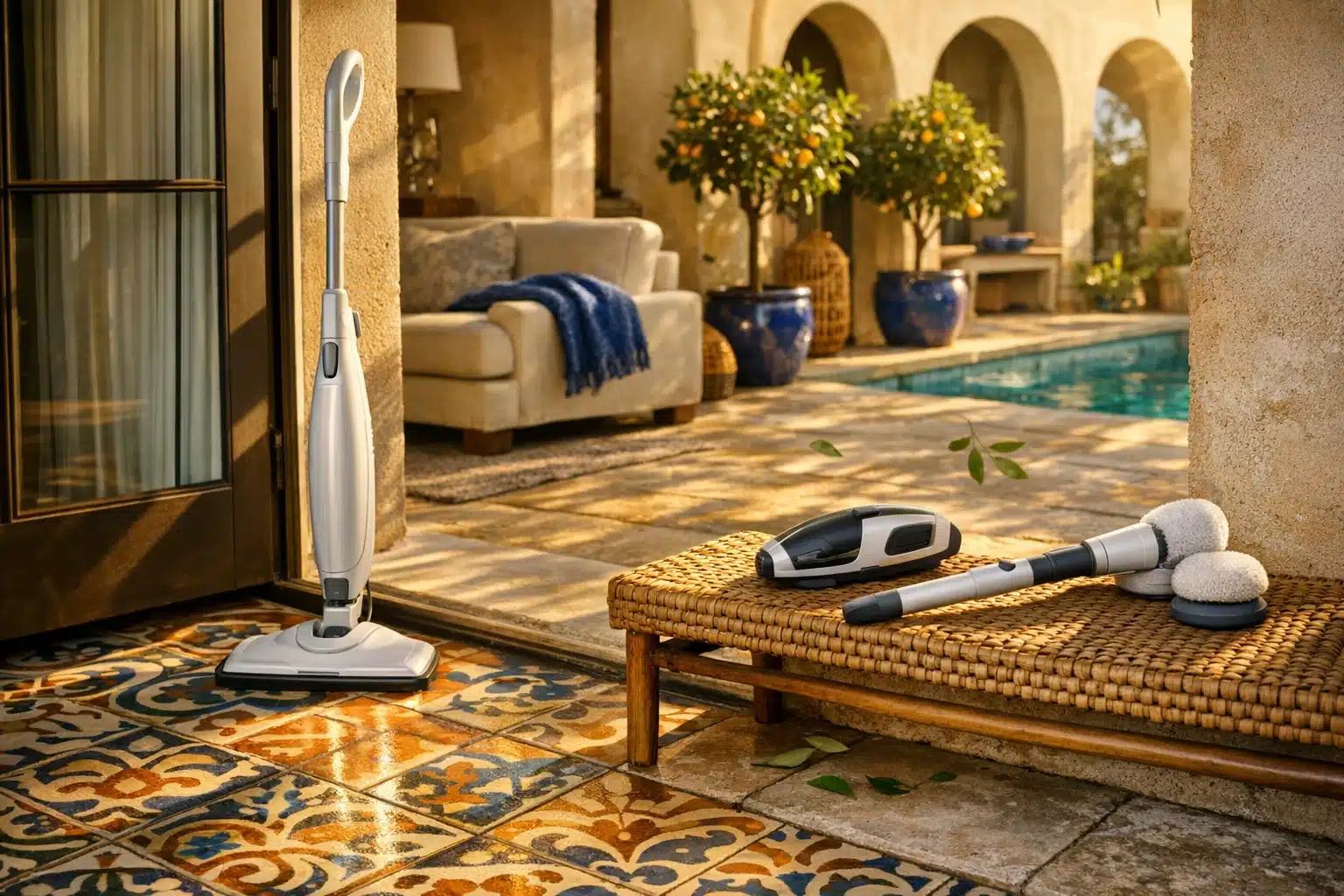
Handheld vacuums are among the most versatile options. They work well for upholstery, stairs, car interiors, window sills, and pet beds. Some include motorized mini brush heads that help lift embedded hair from fabric, which can be more useful than raw suction alone. Dustbin capacity is usually modest, often under one liter, but that is not a flaw if the tool is meant for short jobs. The key comparison points are weight, emptying design, included attachments, and battery life. A model that lasts only ten minutes may still be perfect for a car cleanout, while a heavier unit with longer runtime may suit a household that uses it every day.
Electric scrubbers appeal to a different kind of cleaner: the person tired of kneeling over grout lines with a stiff brush. Many feature extendable handles, rotating heads, and battery runtimes that commonly range from 30 to 90 minutes. They are particularly helpful on shower walls, tubs, tile corners, and textured surfaces where manual scrubbing becomes tiring. The best ones are not miracle devices, but they do transfer effort from shoulders and wrists to a motor, which can make weekly maintenance feel much less punishing.
Steam cleaners are another frequent deal-page favorite. They use heated steam to loosen dirt on sealed surfaces and can reduce reliance on strong chemical cleaners in some tasks. However, they are not universal tools. Some flooring materials and finishes are not suitable for steam, and shoppers should always check manufacturer guidance before use. The real advantage is versatility: a decent steam unit may help with tile, grout, glass, sealed hard floors, and certain kitchen surfaces.
- Handheld vacuums are strongest in cars, furniture, and quick spot cleaning.
- Electric scrubbers shine in bathrooms and on textured surfaces.
- Steam cleaners work best when you need heat-based loosening on compatible sealed areas.
These smaller gadgets rarely replace core cleaning tools, but they can erase the most stubborn bottlenecks in a routine. Sometimes the smartest deal is not the biggest machine in the cart. It is the one that finally makes you stop avoiding the corners.
How to Read Amazon Deals Without Getting Distracted by the Discount
A sale badge is persuasive because it simplifies the story. It says a product costs less today than it did before, and the brain likes the neatness of that message. Yet smart shopping for cleaning gadgets requires a more layered approach. A strong deal is not simply a lower number. It is a useful tool at a price that makes sense after considering performance, replacement costs, build quality, and how often the gadget will realistically be used.
Start with the product’s job description. If the listing claims a device can vacuum, mop, sanitize, polish, and transform your weekend routine, pause for a second. Multipurpose tools can be convenient, but they are often strongest in one or two functions rather than all of them. Customer reviews become more meaningful when you search for comments about a specific task. A robot vacuum may earn praise for daily dust pickup while drawing complaints about hair tangles. A steam cleaner might impress on tile yet disappoint on large areas if its water tank is too small.
Battery performance is another detail worth reading closely. Cordless devices often advertise their longest runtime under low-power settings with minimal attachments. Real-world performance on carpet, turbo modes, or heavy debris can be significantly shorter. Weight matters too. A machine that seems manageable on paper may feel awkward after ten minutes of stair cleaning. For filtration, sealed systems and HEPA-rated filters are valuable for many households, especially allergy-conscious ones. In technical terms, true HEPA filters are designed to capture 99.97% of particles at 0.3 microns, though overall cleaning results still depend on the machine’s airflow path and seals.
It also helps to think beyond the purchase date.
- Are replacement filters, mop pads, brushes, or batteries easy to find?
- Does the gadget require proprietary cleaning solution?
- Is the water tank or dustbin simple to remove and wash?
- Does the product fit your storage space when assembled?
- Are there clear warranty terms and a realistic return window?
Finally, compare the deal with your cleaning habits, not your shopping mood. A person who dislikes maintenance may not enjoy a gadget that needs rinsing and drying after every use. A small apartment may not benefit from a bulky machine built for large homes. The best bargain is often the item that matches your routine so naturally that it becomes part of the week instead of another object waiting for motivation.
What Makes Sense for Your Home: A Practical Conclusion for Real Shoppers
For most people, the right home cleaning gadget is not the most advanced model on the sale page. It is the one that reduces the most friction in your current routine. That sounds simple, but it is an important shift in mindset. Many shoppers begin with the discount and work backward toward a justification. A better method is to begin with the problem and see whether the sale genuinely improves the equation. If your main frustration is pet hair on rugs, a dependable stick vacuum or a well-designed robot may deliver far more value than a niche gadget with flashy extras. If bathroom buildup is the recurring battle, an electric scrubber may feel like the real hero of the cart.
Apartment dwellers usually benefit from compact, flexible devices that store easily and work across multiple surfaces. A cordless stick vacuum or a strong handheld model often makes more sense than a bulky floor washer. Families with children may appreciate tools that shorten response time, since quick cleanups matter when spills are frequent. Pet owners should prioritize tangle-resistant brush heads, easy dustbin emptying, and attachments made for upholstery and edges. Shoppers who are sensitive to dust may want to pay closer attention to sealed filtration and washable components. Older adults or anyone with mobility concerns may care most about weight, handle design, and how much bending a tool actually removes.
- If you want daily maintenance with minimal effort, look first at robot vacuums.
- If you want one adaptable tool for floors, stairs, and furniture, start with cordless sticks.
- If hard-floor messes dominate your week, compare wet-dry cleaners and steam-capable options carefully.
- If detail cleaning is your biggest pain point, handheld vacuums and scrubbers deserve serious attention.
The useful takeaway is this: Amazon deals can be a helpful opening, not a final answer. Prices change, listings rotate, and promotional language is designed to accelerate decisions. Your home, however, has a stable pattern. It has the same corners, the same shedding pet, the same hallway dust, the same shower grout, and the same storage limits. Buy for that reality. When a discounted gadget meets a repeated need, the purchase can feel less like shopping and more like quietly reclaiming time from a chore that never asked permission to become routine.