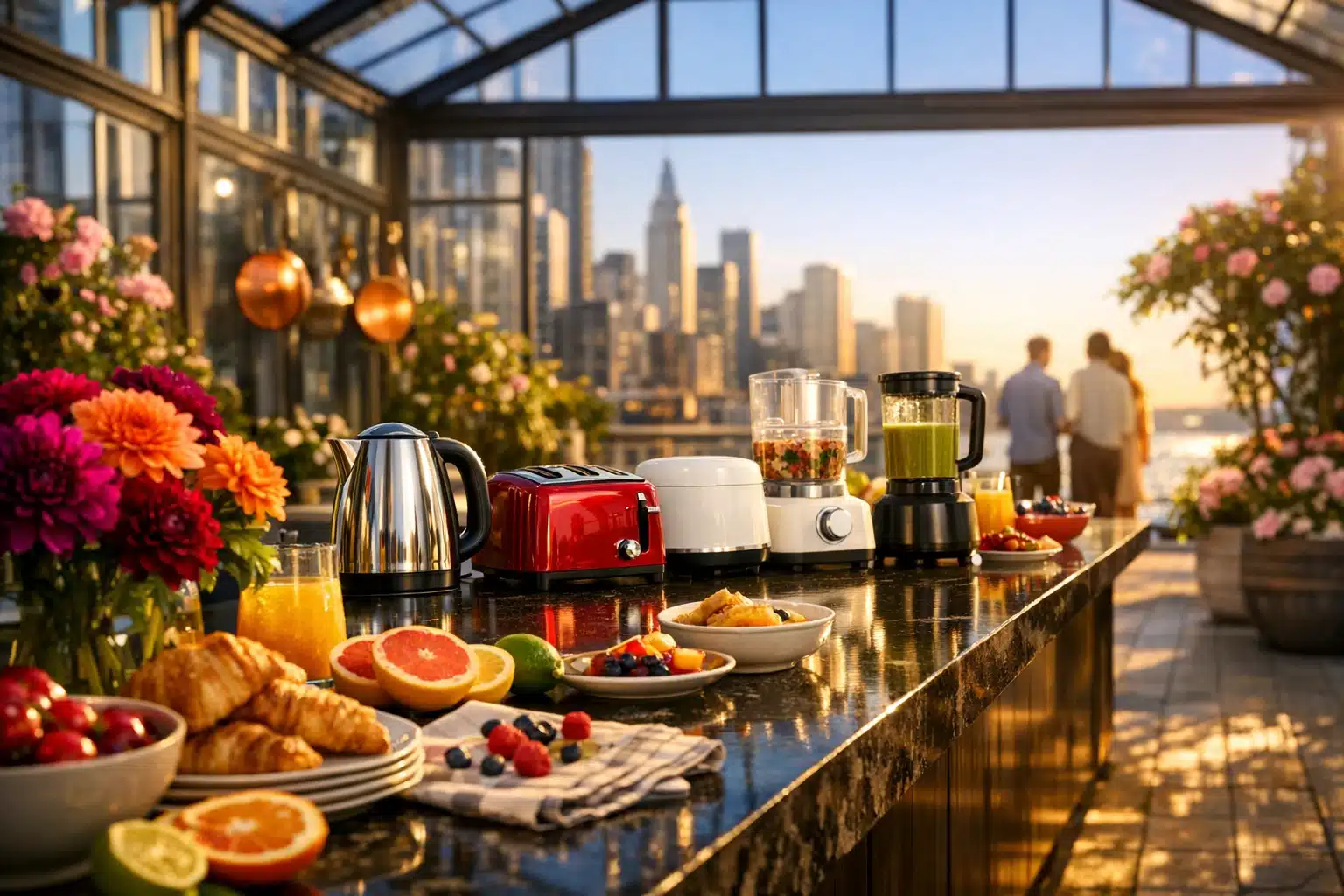
Kohl’s Is Clearing Out These Small Kitchen Appliances
A kitchen upgrade does not always begin with a renovation; sometimes it starts with a discounted countertop appliance that fixes a daily frustration. Kohl’s clearance activity matters because these markdowns can turn once-aspirational tools into realistic buys for families, students, and first-apartment cooks. From quicker breakfasts to less chaotic dinner prep, the right machine can justify its footprint surprisingly fast. This article looks at the categories worth watching, the features that matter, and the shopping habits that help turn a sale into a genuinely useful purchase.
Outline and Why Kohl’s Small Appliance Clear-Outs Deserve Attention
Before diving into individual categories, it helps to map the territory. A clear outline keeps bargain hunting from turning into random scrolling, and that matters when small appliances are involved. These products live at the intersection of impulse and practicality: they promise convenience, but they also take up space, draw electricity, and sometimes end up forgotten in a cabinet. Here is the basic roadmap for evaluating a Kohl’s appliance clear-out:
- Identify which appliance types solve a recurring kitchen problem.
- Compare features, size, and ease of cleaning before focusing on the discount.
- Check whether the final cost is still competitive after all promotions and exclusions.
- Think about how often the appliance will realistically be used in your home.
- Review warranty details, included accessories, and return terms.
Kohl’s is especially relevant in this conversation because it sits in a useful middle ground. It is not purely a luxury cookware destination, and it is not strictly a warehouse-style discounter either. That means shoppers often encounter a mix of entry-level basics, giftable midrange models, and feature-rich machines that originally sat at a higher price point. When clearance enters the picture, the selection can become unexpectedly interesting. A modest toaster might appear next to a digital air fryer, a programmable coffee maker, or a compact stand mixer, and suddenly the shopper is not just replacing an appliance but rethinking how the kitchen works day to day.
There is also a timing element. Retailers often rotate kitchen inventory around holidays, wedding season, dorm and apartment move-ins, and broader seasonal resets. When that happens, the language of the sale can sound dramatic, but the real story is more practical: shelf space is being made for new models, colors, or packaging. That is good news for buyers who care more about function than about owning the latest release. A slightly older model with strong core features can be the smarter purchase. In other words, a clearance tag is not the finish line; it is the start of a better question: will this appliance save time, reduce friction, or help you cook in a way you already want to cook?
Air Fryers, Toaster Ovens, and Multicookers: The Workhorses Most Shoppers Notice First
If there is one corner of the small-appliance aisle that tends to attract immediate attention, it is the world of countertop cookers. Air fryers, toaster ovens, and multicookers have moved from trendy to ordinary in many households, and that shift explains why they often appear in promotional cycles and clearance assortments. They all promise efficiency, but they do not solve the same problem. Choosing the right one is less about following kitchen fashion and more about understanding your own routine.
Air fryers are usually the easiest sell because their benefit is obvious: fast, high-heat cooking with a crisp finish and less wait time than a full oven. Basket-style models often range from about 2 to 4 quarts for one or two people, while 5- to 8-quart versions are better suited to families or batch cooking. They excel at frozen foods, vegetables, chicken pieces, and quick reheating. The trade-off is capacity shape. A basket may hold plenty of volume, yet still struggle with larger items or flatter foods that need more surface area. That is where toaster ovens and air fryer ovens can be more flexible. They can toast bread, reheat pizza, bake small trays of cookies, and handle casseroles or sheet-pan style meals that would feel awkward in a basket.
Multicookers belong in a different lane. They are not about crisping first; they are about range. A good multicooker can pressure cook, slow cook, sauté, steam, and sometimes even make rice or yogurt. For apartment kitchens or households that dislike appliance clutter, that kind of consolidation matters. One machine replacing several single-use devices can be a practical victory. Still, the learning curve is steeper than it is with an air fryer, and the best results tend to come from cooks who regularly prepare soups, beans, stews, grains, and braised dishes.
- Choose an air fryer if speed and crisp texture matter most.
- Choose a toaster oven if versatility and baking space matter more.
- Choose a multicooker if you want one appliance to cover several cooking methods.
When Kohl’s clearance features these appliances, shoppers should compare interior size, presets, maximum temperature, and cleanup requirements. A sleek digital panel may look impressive, but removable dishwasher-safe parts and a usable capacity often matter more once the honeymoon phase ends. The best countertop cooker is not the one with the loudest promise; it is the one that fits the rhythm of weeknights, leftovers, and real-life hunger at 6:30 p.m.
Morning Makers: Coffee Machines, Electric Kettles, Toasters, and Other Breakfast Helpers
Breakfast appliances rarely receive the glamour of a high-powered blender or a shiny mixer, yet they often deliver the most consistent daily value. That is why they are worth close attention when Kohl’s clears out small kitchen gear. A coffee maker that saves five rushed minutes every morning or a kettle that heats water with precision can improve a routine in ways that feel small at first and surprisingly important by the end of the month. This category is not just about caffeine; it is about starting the day with less friction.
Traditional drip coffee makers remain a dependable choice for households with multiple coffee drinkers. Their strengths are volume, simplicity, and predictability. A standard machine may brew 10 to 12 cups, making it practical for couples, families, or anyone who refills a mug through the morning. Programmable settings add convenience, especially for people who want coffee waiting when they walk into the kitchen. Single-serve brewers serve a different audience. They are ideal for speed, portion control, and variety, especially in homes where one person drinks coffee and another wants tea or hot cocoa. The drawback is ongoing cost. Pods are convenient, but they can raise the price per cup and create more packaging waste. That does not make them a bad choice; it simply shifts the cost from upfront hardware to daily use.
Electric kettles deserve more attention than they often get. They heat water faster than many stovetop methods, shut off automatically, and can be useful well beyond tea. Oatmeal, instant noodles, pour-over coffee, broth, and French press brewing all become easier with a fast kettle nearby. Some models add temperature presets for green tea, black tea, or delicate coffee brewing, which matters for people who care about flavor. A kettle is one of those quiet tools that earns respect through repetition rather than spectacle.
Toasters, toaster ovens, sandwich presses, and compact griddles also fall into this breakfast-support category. A two-slice toaster may be enough for a solo cook, while a four-slice unit better suits larger households or weekend brunch routines. Griddles can shine in homes where pancakes, eggs, and quesadillas show up often. The key is matching the appliance to actual habits rather than to an imagined lifestyle.
- Drip machines favor volume and convenience.
- Single-serve brewers favor speed and individualized drinks.
- Electric kettles favor flexibility and quick heating.
- Basic toasters and griddles favor reliable daily repetition.
Clearance pricing matters here because these appliances are often functional rather than aspirational purchases. Shoppers do not need every morning gadget on the shelf. They need the one that turns a sleepy kitchen into a smoother launchpad.
Blenders, Food Processors, and Mixers: Which Prep Appliance Earns Its Counter Space?
Preparation appliances can be the difference between cooking more often and ordering takeout out of fatigue. They save labor, but they do so in different ways, and that distinction becomes crucial when scanning a sale page or clearance rack. Blenders, food processors, hand mixers, immersion blenders, and stand mixers may appear to overlap, yet each one occupies a distinct role in the kitchen. The most expensive option is not automatically the most useful, and the smallest one is not always the compromise it seems.
Blenders are built for liquids and semi-liquids first. They shine with smoothies, sauces, soups, shakes, and frozen drinks. Entry-level machines may handle softer fruit and everyday blending, while more powerful units can crush ice more consistently and process tougher ingredients. Motor strength matters, but jar shape, blade design, and usable controls matter too. For many households, a compact personal blender is enough for breakfast smoothies and protein shakes. Families or people who cook more broadly may prefer a full-size jar that can handle soups, sauces, and larger batches. An immersion blender belongs in this same family, but with a different advantage: it blends directly in the pot, which is a gift when soup season arrives and nobody wants extra dishes.
Food processors are more about chopping, slicing, shredding, and dough mixing than about silky drinks. If you make slaws, pie crusts, hummus, salsa, or large prep batches, a processor can cut real time from the job. A small chopper may be plenty for onions, herbs, nuts, and dressings. A full-size processor becomes worthwhile when the volume rises or when repetitive prep work steals the joy from cooking. Think of it as the sous-chef that never complains and never asks for the recipe.
Mixers split into hand and stand models. A hand mixer is affordable, easy to store, and strong enough for whipped cream, cookie dough, cake batter, and mashed potatoes. A stand mixer brings hands-free convenience and greater power, especially for serious bakers working with bread dough or larger batches. It can also become a broader kitchen system when attachments are available, though those add-ons should be treated as optional benefits rather than the reason to buy.
- Choose a blender for drinks, soups, and sauces.
- Choose a food processor for chopping, slicing, and repetitive prep.
- Choose a hand mixer for occasional baking and easy storage.
- Choose a stand mixer for frequent baking and heavier doughs.
When these appliances appear in a Kohl’s clear-out, shoppers should look closely at bowl size, attachments, weight, and cleanup. A strong deal only becomes a smart one when the machine fits both the menu and the cabinet.
Conclusion: How to Shop Kohl’s Clearance Like a Practical Cook, Not an Impulse Buyer
For budget-conscious shoppers, first-home cooks, busy parents, students, and anyone trying to stretch a household dollar, small-appliance clearance events can be genuinely useful. The opportunity is not simply to spend less. It is to spend with more precision. A marked-down air fryer, kettle, blender, or coffee maker can improve daily life when it answers a real need, but even a deep discount loses its appeal if the appliance is awkward to store, hard to clean, or too specialized for your habits. That is the central lesson of any kitchen sale: utility matters more than excitement.
The smartest approach is to start with friction points in your routine. Are rushed mornings the problem? Then a programmable coffee maker, fast kettle, or better toaster may deliver more value than a flashy machine with ten presets. Are weeknight dinners the obstacle? Then an air fryer, toaster oven, or multicooker deserves more attention. Do you avoid cooking because chopping and prep feel tedious? That points toward a food processor, blender, or mixer. Once the appliance category is clear, the comparison becomes easier and more rational. You can focus on size, power, cleanup, reliability, and the total cost after any rewards or promotions are factored in.
- Measure your available counter and cabinet space before buying.
- Compare final checkout cost, not just the original crossed-out price.
- Confirm whether all accessories, manuals, and inserts are included.
- Check return policies and manufacturer warranty coverage.
- Prioritize appliances that solve recurring problems at least several times a week.
Kohl’s can be an appealing place to shop because the assortment often spans practical basics and more feature-rich models, giving buyers room to match ambition with budget. Still, the best outcome does not come from chasing the steepest markdown. It comes from choosing a machine that earns its keep. A small kitchen appliance should not feel like décor with a power cord. It should become part of the rhythm of your day: the tool that gets breakfast moving, makes lunch prep less annoying, or turns dinner from a task into something manageable. If shoppers keep that standard in mind, a clearance table stops being a temptation and starts becoming a useful source of everyday upgrades.