2-Night Cruise from Newcastle to Edinburgh: Itinerary, Tips, and What to Expect
Outline:
– Why a two-night sailing between Newcastle and Edinburgh makes sense for time-pressed travelers
– Route overview, distances, and seasonality
– Sample day-by-day itinerary with shore highlights
– Cabins, dining, and what to pack for short North Sea cruises
– Practical costs, booking windows, sustainability, and accessibility
– Arrival logistics in Edinburgh and final takeaways
Introduction:
A short sailing between Newcastle and Edinburgh offers something that a quick train ride can’t: a moving panorama of North Sea cliffs, island bird colonies, and the slow, cinematic approach to the Firth of Forth. For weekenders, first-time cruisers, and locals exploring their own coast, two nights at sea balance convenience with the pleasure of unhurried travel. Below, you’ll find an evidence-based guide to timing, budgeting, and planning—plus a detailed sample itinerary—so your mini-cruise feels polished rather than rushed.
Route Overview: Distance, Timing, and Seasonality on the North Sea
The coastal run from the River Tyne to the Firth of Forth is short enough to fit neatly into a weekend yet rich enough to feel like a true voyage. Depending on the ship’s speed and coastal routing, expect roughly 85–110 nautical miles between embarkation near Newcastle and berthing near Edinburgh’s waterfront. Typical cruising speeds on short coastal itineraries fall between 14 and 20 knots, translating to around 8–12 hours of pure sailing time. On a two-night schedule, operators often combine an evening departure with either a slow coastal run or a staged arrival that times sunrise near islands like the Isle of May or Bass Rock.
Season matters. Summer (June–August) brings long daylight—up to 17 hours in late June at northern latitudes—so sail-ins feel grand and unhurried. Sea temperatures, while rarely used for swimming, rise into the low teens Celsius, and average air highs in Edinburgh reach about 18–20°C in July. Spring and early autumn are attractive shoulder periods with thinner crowds and more dynamic skies; plan for mixed conditions, from glassy seas to 1–2 m swells. Winter sailings are rarer on this micro-route and can be choppier, with brisk westerlies and short daylight.
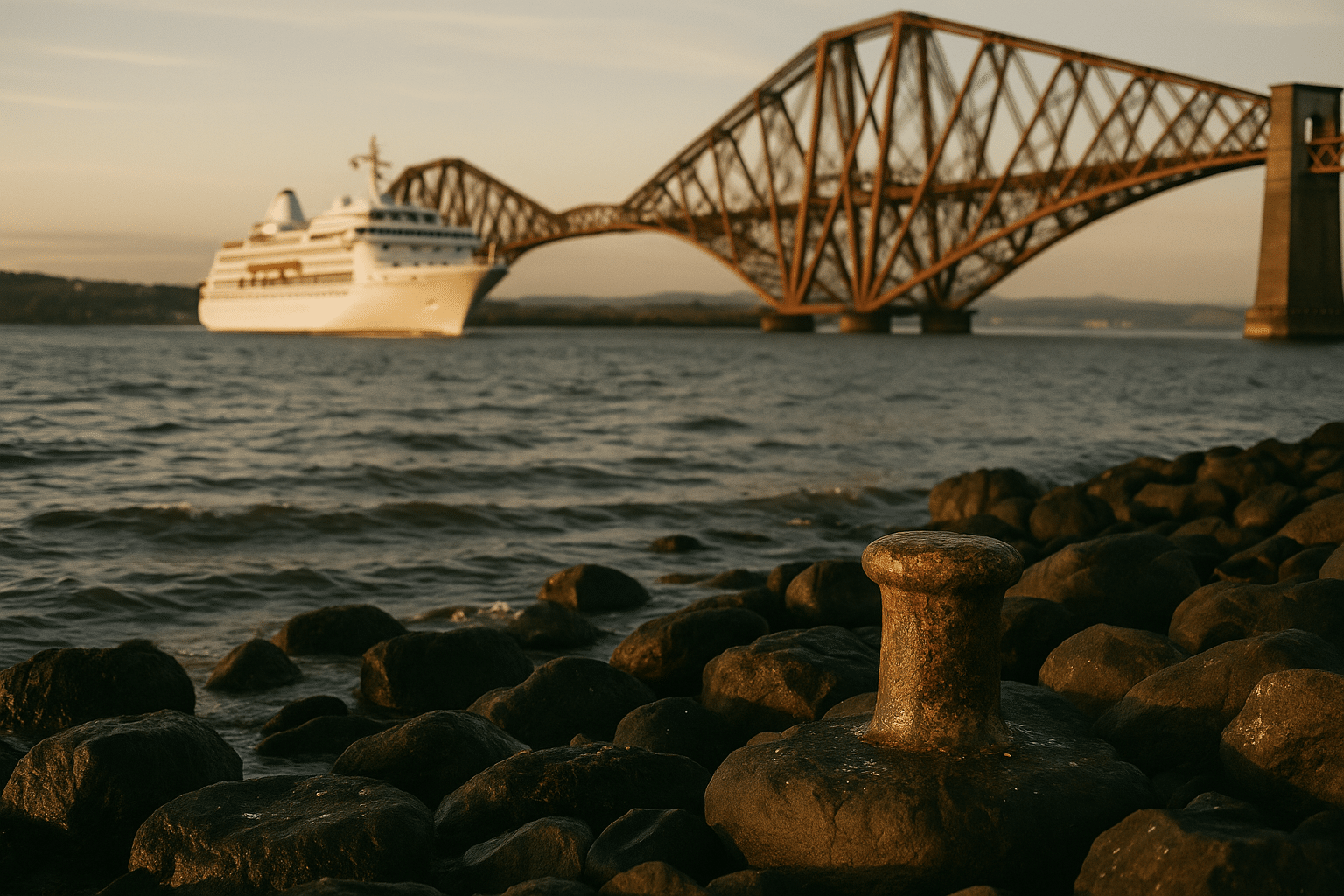
Scenically, the approach offers a highlight reel of the east coast: cliff-backed coves north of Tynemouth, the tidal flats near Lindisfarne, and bird-rich waters guarded by lighthouse-topped outcrops. As you near the Forth, look for gannets that wheel in tight formation, common and bottlenose dolphins that sometimes ride the bow wave, and, in early season, puffins flicking over the swells. The finale is the Firth of Forth itself, where a trio of bridges spans history. Ships may anchor off South Queensferry for tendering, berth at a deep-water facility west of the city, or dock in the historic docks east of the centre, each with slightly different transfer times into town.
Quick planning notes you can use immediately:
– Sailing time typically fits within an overnight plus a slow morning approach.
– Summer gives the longest scenic window; shoulder months can be rewarding for value and atmosphere.
– Expect cool, variable weather even in July; layers and windproof outerwear are practical rather than optional.
– Wildlife sightings are common but never guaranteed; bring compact binoculars to make the most of them.
Sample Itinerary: A Realistic Two-Night Plan from Embarkation to Edinburgh
Day 1: Embark near Newcastle in the late afternoon. After check-in and the safety drill, head on deck for sailaway past the piers and beaches that frame the river mouth. If departure aligns with golden hour, you’ll watch the coastline warm to amber while gulls and cormorants trace the swells. Dinner on short sailings is often scheduled early enough to let you alternate between courses and quick dashes outside for the changing light—think of it as a progressive meal with a moving view. Evening programming typically includes a welcome talk, an acoustic set, or a relaxed lounge set; keep it light so you’re fresh for the morning approach.
Day 2: Dawn near the Firth of Forth, ideally with a slow glide past outlying islands. Breakfast service on such days benefits from arriving early and snagging a window table; the low-angle light and skittering seabirds feel like a travel film shot just for you. Once alongside or at anchor near the city, you’ll usually have a full day to explore. Prioritize a coherent arc rather than ticking boxes. A compact plan might be:
– Morning: Old Town walk from the volcanic ridge to the historic lawn, pausing at viewpoints and closes.
– Midday: Museum or gallery hour; these are dense with artifacts and free or modestly priced.
– Afternoon: New Town crescents for Georgian architecture, then a café stop for something warm and sweet.
– Late afternoon: Calton Hill for citywide panoramas if weather cooperates.
If your ship overnights in port (common on two-night runs), you can extend ashore into the evening. Consider a twilight stroll through cobbled lanes or a quiet riverside path; return times are posted clearly at gangway and in the daily program. If tendering is used, allow buffer time for the ride back, especially around sunset when many guests head aboard at once. Onboard, the second night often features a regional menu nodding to local produce, plus a casual show or deck cinema if weather holds. Pack a light scarf or beanie—North Sea evenings stay brisk even in high summer.
Day 3: After a final breakfast, disembarkation in or near Edinburgh typically starts early and wraps by mid-morning. If you’re extending your stay, arrange luggage storage or a hotel drop with time to spare before your first museum slot or timed attraction. If you’re connecting directly to rail or air, plan transfers with a 30–60 minute safety margin; short coastal ports can experience bursts of demand right after the gangway opens.
Cabins, Dining, and Onboard Experience: Making Short Sailings Feel Spacious
Cabins on two-night itineraries skew practical: clean layouts, efficient storage, and enough quiet to sleep well between a sociable evening and an early arrival. Inside cabins often deliver strong value on a route where daylight hours are best spent on deck or in public lounges with broad windows. Oceanview and balcony categories are rewarding for sunrise approaches to the Forth, though remember that wind on the North Sea can make balcony time brief even in July. If you’re sensitive to motion, midship and lower-deck cabins reduce pitch and roll; earplugs and a sleep mask add comfort when early-morning harbor activity begins.
Dining is streamlined but satisfying on short runs. Expect two or three main options: a seated restaurant, a relaxed buffet or marketplace, and a snack-focused café. Menus lean toward hearty and coastal-friendly—think grilled fish, seasonal root vegetables, and warming desserts—balanced by lighter salads and fruit. Breakfast matters on port days; arriving early secures a quieter table and fresher pastries before the rush. If dietary requirements apply, register them at booking and again at embarkation; crews handle common needs smoothly when given clear notice. For children, many lines offer simplified dishes and earlier service windows that fit family rhythms.
Connectivity and entertainment are present but not the point. North Sea Wi‑Fi can throttle during course changes and in busy evening windows; download maps, podcasts, and reading material before sailing. Short-form programming—acoustic sets, trivia, enrichment talks—suits the pace. Pack to enjoy the ship as a moving lookout rather than a mall:
– Windproof outer layer and compact umbrella for sudden squalls.
– Soft-soled shoes with grip; decks get slick with sea spray.
– Small binoculars for birds and bridges; 8x magnification is versatile.
– Portable battery for phones and e-readers.
– Swimwear only if the ship’s pool is heated; otherwise, consider the spa for a warm-up instead.
Noise etiquette keeps the vibe restful. Close balcony doors gently, avoid dragging furniture on deck at dawn, and use headphones in quiet lounges. If you’re traveling as a couple, carve out a mid-afternoon hour for tea by a windowed bar while many guests are ashore; if you’re with kids, scout the children’s corner and the quietest route between cabin, buffet, and deck before crowds form. Two nights go fast—friction-free routines make them feel longer in the best way.
Practicalities: Budget, Booking Windows, Documentation, Sustainability, and Accessibility
Budgeting first: Short coastal cruises in the UK commonly price from around £180–£450 per person for an interior cabin on a two-night itinerary, depending on season, cabin type, and inclusions. Port taxes and fees can add £30–£70 per person. Gratuity systems vary; plan roughly £10–£15 per person per night if not already included. Drinks packages rarely pay off on a two-nighter unless you prefer specialty coffees, fresh juices, or multiple bar visits daily. Airport-to-ship travel is usually not required on this route; factor in local rail or taxi instead. A realistic weekend budget for two, sharing an inside cabin, might look like:
– Cruise fare and taxes: £420–£900 total
– Gratuities and onboard extras: £40–£120
– City transfers and local transit: £20–£60
– Meals ashore and small admissions: £40–£120
– Travel insurance (short-trip policy): £12–£30
Booking windows of 3–9 months out balance choice and value. Shoulder seasons (April–May, September) often deliver fair pricing and calmer crowds. If school holidays define your calendar, reserve earlier and watch for midweek departures that sometimes undercut weekend rates. Documentation is straightforward for domestic sailings, but policies differ; operators commonly request a valid passport or government-issued photo ID for all guests, and additional paperwork may apply for non-UK nationals. Always align your ID with the name on your reservation to avoid check-in delays.
Sustainability on short cruises is improving but still evolving. Some UK ports are piloting shore-power connections that let ships switch off engines alongside; availability depends on berth and vessel capability. You can lighten your footprint by:
– Choosing newer or recently retrofitted ships with efficiency upgrades.
– Bringing a refillable bottle and skipping single-use plastics onboard.
– Selecting small-group, low-impact shore activities and walking where practical.
– Consolidating laundry and towel use to reduce water and energy demand.
Accessibility considerations deserve early attention. Many modern ships offer step-free routes from gangway to key venues, accessible cabins with roll-in showers, and priority tendering procedures. If your itinerary uses tenders, ask about boarding platforms and sea-state limits well before departure. Port-side, Newcastle’s embarkation facilities are generally reachable by taxi and have designated drop-off zones, while Edinburgh-area berths vary: some offer level gangways; tender ports add an extra link in the chain. Share mobility, dietary, and medical needs at booking and reconfirm a week before sailing so the crew can prepare equipment and assistance.
Edinburgh Arrival Logistics and Final Takeaways for a Smooth, Scenic Escape
Where you dock shapes your day. Ships may use one of three general arrangements:
– Historic docks east of central Edinburgh: direct berthing with short road transfers (roughly 15–25 minutes) into the city centre.
– South Queensferry anchorage: tender ashore near the bridges; local trains from nearby stations to Edinburgh’s main hub take about 15 minutes, with a short uphill walk to the platform.
– Deep-water facility west of town: road transfers typically 35–45 minutes, depending on traffic. Pre-booked shuttles or taxis keep timing predictable; rideshare pricing can spike right after disembarkation.
Public transport is straightforward. A frequent tram line links the northern waterfront to the city centre and the airport, and local buses knit together Leith, the Old Town, and the Georgian crescents. Buy contactless single rides as you go or cap your daily spend with a day ticket; both are convenient for visitors. If time is tight—say you have 24 hours or less—use a simple route that layers history with views and leaves room for a weather pivot:
– Start on the ridge for a brisk orientation of wynds and viewpoints (1–1.5 hours).
– Glide down to a free national collection for an hour among paintings, artifacts, or design.
– Cross to the Georgian grid for crescents and gardens; coffee stop included.
– Finish on an urban hill for panoramas if skies clear; otherwise, pivot to an indoor whisky or storytelling experience.
Food-wise, look for compact menus that showcase seasonal produce—smoked fish, oatcakes, soft cheeses, and buttery pastries are easy wins. For souvenirs that pack light, consider small-batch preserves or postcards featuring local architecture. Weather can flip fast; carry a foldable shell and keep your phone loaded with offline maps to stay nimble.
In summary, a two-night cruise from Newcastle to Edinburgh compresses the richness of a coastal journey into a schedule most weekends can accommodate. The route is short enough to stay restful, yet it delivers a genuine sense of passage—seabirds at dawn, a horizon that widens, and the drama of sailing beneath ironwork that has framed the estuary for generations. Plan with seasonality in mind, pack for mixed weather, and keep your itinerary focused rather than frantic. Do that, and you’ll step off the gangway with a camera roll of sea-lit moments and a city day that feels curated rather than crammed.


