2-Day Mini Cruise from Liverpool to Belfast
A 2-day mini cruise from Liverpool to Belfast is one of those short breaks that can reset your mood without demanding a week off work. You leave the familiar rhythm of the city, settle into a cabin, watch the Mersey fade, and wake up with Northern Ireland within reach. For travellers who want movement, scenery, and a manageable budget, the route has real appeal. It blends transport and holiday into a single experience, which is exactly why it deserves a closer look.
Outline
- What a 2-day mini cruise really includes, and why the Liverpool to Belfast route attracts short-break travellers.
- What to expect on board, from cabins and dining to the pace of the crossing itself.
- How to use limited time in Belfast wisely, with practical sightseeing comparisons.
- How fares, extras, and overall value compare with flying or booking a traditional city break.
- Which travellers will enjoy this trip most, plus planning advice and a clear final verdict.
What a 2-Day Mini Cruise from Liverpool to Belfast Actually Means
The phrase mini cruise sounds glamorous, and in fairness it does contain a little romance, but it helps to understand what you are booking. On this route, a 2-day mini cruise is usually a short return ferry break rather than a large-ship cruise with multiple ports and resort-style scheduling. You board near Liverpool, sail across the Irish Sea, spend a limited but useful stretch of time in Belfast, and then return on the next leg. The appeal lies in how neatly it compresses travel, accommodation, and experience into one package.
One practical detail matters immediately: departures marketed as Liverpool often use the 12 Quays terminal in Birkenhead, on the Wirral side of the Mersey, rather than the central Liverpool waterfront. For most travellers, that is not a problem, but it does affect planning. You may need a taxi, local bus, or extra time if arriving by train into Liverpool Lime Street. That small logistical note is worth knowing early, because a smooth start makes the whole trip feel easier.
The crossing itself is typically around eight hours, although schedules can vary by date, season, and operator. On this corridor, ferry operators rather than traditional cruise companies usually sell the package. That distinction shapes expectations. You are not booking a floating theme park. You are booking a sea journey with cabins, lounges, food options, and the pleasant novelty of travelling while the water does the work beneath you.
Why does this short route matter when low-cost flights exist? Because the ferry offers a different kind of value. Airports often compress you into queues, baggage rules, security procedures, and rigid timing. A mini cruise replaces some of that friction with a slower, more spacious experience. You can walk around, sit by a window, enjoy a meal, and feel that the trip has begun before you arrive.
It tends to suit several types of traveller:
- Couples looking for a short, self-contained break
- Friends who want a lively but manageable getaway
- Solo travellers who enjoy the journey as much as the destination
- People who prefer avoiding airports where possible
It is less ideal for anyone wanting long hours in Belfast, a tightly packed sightseeing schedule, or the nonstop entertainment associated with a major ocean cruise. The charm here is not excess. It is efficiency with atmosphere, a brief change of scene that still feels like travel in the old-fashioned sense.
Life On Board: Cabins, Dining, Atmosphere, and What the Journey Feels Like
The onboard experience is where this route either wins you over completely or reminds you that travel style is personal. Modern ferries on the Liverpool to Belfast run are built for comfort, but they are still working passenger vessels, not luxury liners. That said, many travellers are pleasantly surprised by how enjoyable the crossing can be. Cabins provide privacy and a proper place to rest, lounges give you room to read or chat, and food outlets make the trip feel more civilised than a rushed dash through an airport terminal.
Cabin choice matters more than some first-time bookers expect. If you are taking an overnight or late crossing, a private cabin is usually worth serious consideration. Reclining seats can be cheaper, but a cabin gives you a bed, a door you can close, and the ability to arrive in Belfast feeling reasonably human. For couples, friends, or anyone who values sleep, that difference can shape the entire next day. A window cabin adds atmosphere, although interior cabins are often fine for short sailings if budget is the main concern.
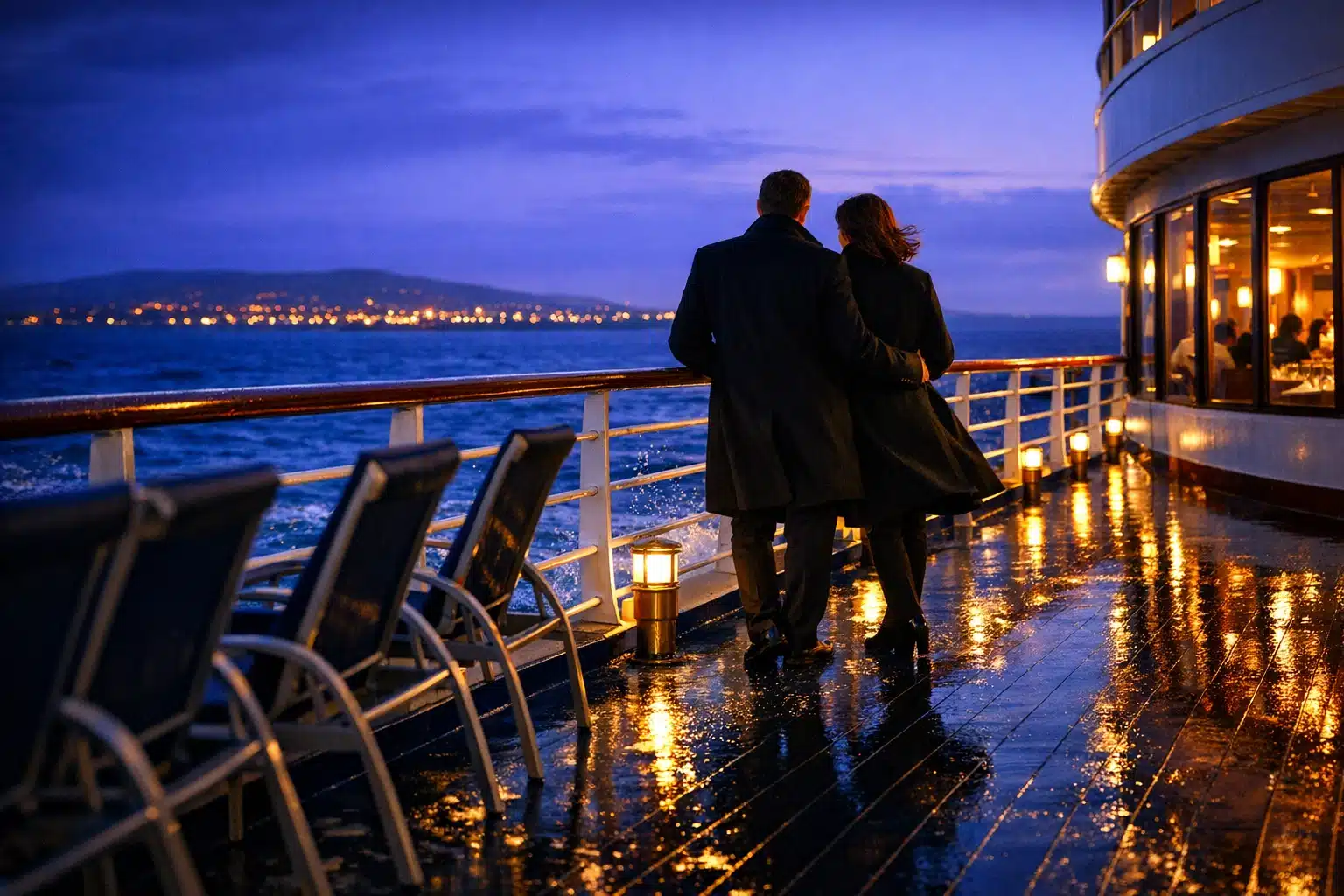
Food and drink options vary by ship and sailing, but you can usually expect a mix of casual dining, grab-and-go choices, and bar or lounge areas. The smartest approach is to think of meals as part of the travel day rather than an afterthought. Instead of eating hurriedly before check-in, many people enjoy boarding, settling in, and then having dinner on board as the shoreline recedes. When Liverpool’s lights begin to thin into a bright necklace across the water, the trip starts to feel less like transport and more like an intermission between routines.
A few practical habits improve the crossing:
- Pack a small overnight bag so you do not need to unpack everything at once.
- Bring layers, because open decks and public areas can feel cooler than expected.
- If you are sensitive to motion, consider sea-sickness remedies before departure.
- Download entertainment in advance in case you want quiet time in your cabin.
Compared with flying, the biggest difference is how time is experienced. A flight is faster in the air, but it often fragments the day with transfers, queues, boarding calls, and waiting around. A ferry crossing is longer, yet it can feel less stressful because the travel time becomes usable. You can eat, sleep, read, or simply stare at the horizon and let the mind unclench. For many travellers, that slower rhythm is the true selling point of the mini cruise.
Making the Most of Belfast in a Short Stay
Belfast rewards curiosity, even when time is tight. A mini cruise does not give you the luxury of wandering without a plan, so the smartest visitors choose a few priorities and accept that this is a tasting menu, not a full banquet. The city is compact enough that a short visit can still feel satisfying, especially if you focus on one or two districts instead of trying to cover everything. From the ferry terminal, onward travel into the city is usually straightforward by taxi or pre-planned transport, and the centre is not far by big-city standards.
If this is your first visit, Titanic Belfast is often the headline attraction for good reason. The museum is visually striking, rooted in local history, and well suited to travellers who want a structured, high-quality introduction to the city’s industrial past. It can easily take a few hours, so it is best treated as a major stop rather than something to squeeze in between other plans. Nearby, the Titanic Quarter also gives the waterfront a distinctive atmosphere, balancing regeneration, heritage, and open space.
Travellers who prefer street life and a sense of local texture may get more from the city centre and Cathedral Quarter. Around City Hall, you can walk through handsome civic spaces, cafés, shops, and historic streets without needing complicated transport. Cathedral Quarter brings pubs, music, murals, and that slightly offbeat energy that makes a short city visit memorable. If you are interested in Belfast’s political history, black cab tours and mural areas offer context that many visitors find more impactful than museum panels alone, provided you choose a reputable tour and allow enough time.
A practical way to structure a short stop is to decide your travel personality first:
- History-focused: Titanic Belfast and a political history tour
- Culture-focused: City Hall, Cathedral Quarter, local food, and music venues
- Relaxed explorer: waterfront walk, central cafés, and one major attraction
- Photography-minded: Titanic Quarter, street art, and older civic architecture
The real comparison to keep in mind is not Belfast versus a full weekend in another city, but Belfast within the rules of a mini cruise. In that setting, it performs well. You can have a meaningful few hours, eat well, see recognisable landmarks, and leave with a stronger sense of place than many airport-based day trips manage. The city’s mixture of history, resilience, and everyday friendliness gives even a brief visit surprising depth.
Cost, Value, and How It Compares with Flying or a Standard Hotel Break
Price is often the deciding factor for a short trip, and this is where the Liverpool to Belfast mini cruise deserves a careful rather than simplistic comparison. The headline fare may look competitive, but true value depends on what is included and what kind of traveller you are. A mini cruise package often bundles the return sailing and a cabin, which means transport and one or two nights of accommodation are effectively intertwined. That structure can make the trip feel economical, especially during off-peak periods or when booked as a promotional short break.
Still, total cost is shaped by several moving parts. Travel to the departure terminal matters, especially because “Liverpool” sailings generally leave from Birkenhead. Meals on board, upgraded cabins, drinks, parking, attraction tickets in Belfast, and local transfers all affect the final number. If you are travelling as a foot passenger and keeping things simple, the route may be quite cost-effective. If you add premium cabin options, flexible tickets, and multiple extras, the budget rises quickly.
Compared with flying, the equation is more nuanced than speed versus price. A low-cost airfare can appear cheaper at first glance, but once you add airport transfers, luggage charges, seat selection, and a hotel room, the difference may narrow. Flights also cost you flexibility in a different way. You may save clock time, but lose comfort and spontaneity. The ferry can be better value for travellers who see the journey itself as part of the break, not dead time to be endured.
Compared with a regular hotel-based city break, the mini cruise offers a built-in sense of occasion. You are not just booking transport and a room separately; you are buying a small narrative arc. Departure feels like an event, the overnight crossing adds novelty, and the return journey gives the trip a satisfying frame. That emotional value is hard to quantify, but it does matter.
When comparing prices, look at these elements together:
- Return transport cost
- Cabin or sleeping arrangement
- Food and drink spending
- Transfers at both ends
- Time available in Belfast
- The importance you place on comfort and atmosphere
The best booking strategy is usually to compare total trip cost rather than base fare, travel off-peak if possible, and be realistic about how much time ashore you want. If your main goal is maximum hours in Belfast, flying may win. If you want a budget-conscious break with character, the mini cruise becomes much more persuasive.
Practical Tips and Final Verdict for Weekend Travellers
The success of a 2-day mini cruise often comes down to planning the small details well. Documentation is the first thing to check. Travel requirements can depend on your nationality, the operator, and the nature of the sailing, so it is wise to confirm current ID rules before departure rather than relying on assumptions. British and Irish travellers often find the route straightforward, but photo identification may still be requested, and international visitors should be especially careful to verify what is needed.
Check-in times also deserve respect. Ferry travel feels more relaxed than airport travel once you are on board, but you still need to arrive in good time. If you are coming from central Liverpool, build in the transfer to Birkenhead instead of treating it as an afterthought. Weather is another factor. Irish Sea crossings are routine, and ships are designed for them, but conditions can vary by season. Travellers who dislike motion should plan accordingly and avoid pretending they will simply “be fine” if they know they are usually affected.
Packing is best kept light and strategic. Because the trip is short, you do not need much, but the right few items make a difference: comfortable walking shoes, a weatherproof layer, phone charger, small day bag, and any medications you may need on board or ashore. If you are travelling without a car, think especially carefully about what you want to carry around Belfast during your limited stop.
This kind of break tends to work best for:
- Couples wanting an easy short getaway with a little atmosphere
- Friends who enjoy travel as part of the fun, not just the destination
- Solo travellers comfortable with independent planning and short city visits
- People who prefer slower transit and less airport hassle
It is less suited to travellers who want several full days in Belfast, highly structured luxury, or absolute certainty over calm weather and fixed schedules. In other words, the trip rewards flexibility and a certain affection for the journey itself.
For weekend travellers, that is the heart of the verdict. A 2-day mini cruise from Liverpool to Belfast is not the fastest way to reach Northern Ireland, and it is not pretending to be. Its strength lies in combining movement, rest, and exploration into one compact experience. If you want a short break with sea views, a cabin door to close behind you, and a city visit that feels earned rather than rushed, this route makes a lot of sense. It is a practical little adventure, and for the right traveller, that is more than enough.