10 Wellness and Relaxation Gadgets for Couples: Calm, Comfort, and Connection
Outline and Buying Framework: Start with Massage Tools That Invite Shared Care
Modern couples often spend more time syncing calendars than noticing how tired they both feel. That is why wellness gadgets matter less as trendy purchases and more as gentle prompts: a warm pad on the sofa, a quieter alarm at dawn, a diffuser that changes the mood of a room in minutes. When chosen with care, these tools can support rest, lower daily friction, and make shared downtime easier to protect.
Article outline: • first, how to choose gadgets that both people will actually use; • second, massage tools for tension relief; • third, sleep devices that support recovery; • fourth, atmosphere builders for calm evenings; • fifth, heat, hydro, and mindful tech that can turn short breaks into repeatable rituals. This structure keeps the focus on practical value rather than novelty, because the most useful gadget is usually the one that quietly becomes part of weekly life.
The first strong category for couples is massage support, and the most versatile option here is a percussion massage gun. These devices use rapid pulses to target tight muscles in the shoulders, calves, upper back, and legs. For active couples, they can be especially helpful after long walks, gym sessions, or desk-heavy workdays. Most models offer several speed settings and interchangeable heads, which matters more than flashy branding. A softer ball head usually works well for general use, while a flatter head can feel better on larger muscle groups. When comparing models, look at noise level, battery life, grip comfort, and stall force rather than choosing only by power claims. A loud device is less likely to become part of a peaceful routine, and an awkward handle can make one partner give up quickly. Massage tools do not replace medical treatment, but evidence around massage in general suggests it may help reduce perceived muscle tension and promote short-term relaxation.
The second gadget in this category is the shiatsu neck and back massage pillow. Compared with a massage gun, it is less precise but more passive, and that difference is important. A shiatsu pillow can sit behind the neck on a couch, behind the lower back on a chair, or under the calves while watching a film. Many include optional heat, rotating nodes, and straps for securing the pillow to a chair. For couples, this gadget often wins on convenience: one person can use it while reading, and then the other can switch without much setup. In a direct comparison, the massage gun is better for targeted relief and athletic recovery, while the shiatsu pillow is better for shared, low-effort comfort. Think of the massage gun as the practical specialist and the shiatsu pillow as the quiet generalist. If your home evenings tend to be busy and short, the pillow may get more real use. If one or both of you regularly deal with post-workout soreness, the massage gun offers more control. The best choice depends less on marketing and more on whether your shared routine needs active treatment or easy, repeatable comfort.
Sleep Recovery for Two: Weighted Blankets and Sunrise Alarm Clocks
Few things affect a relationship more quickly than poor sleep. When one partner is restless, both may feel it the next morning in the form of irritability, slower focus, and less patience for small inconveniences. That makes sleep-oriented wellness gadgets especially relevant for couples. Adults are generally advised to aim for about seven to nine hours of sleep per night, yet many people fall short because of irregular schedules, artificial light exposure, stress, or a bedroom environment that simply does not help the body settle. Two gadgets stand out here: the weighted blanket and the sunrise alarm clock.
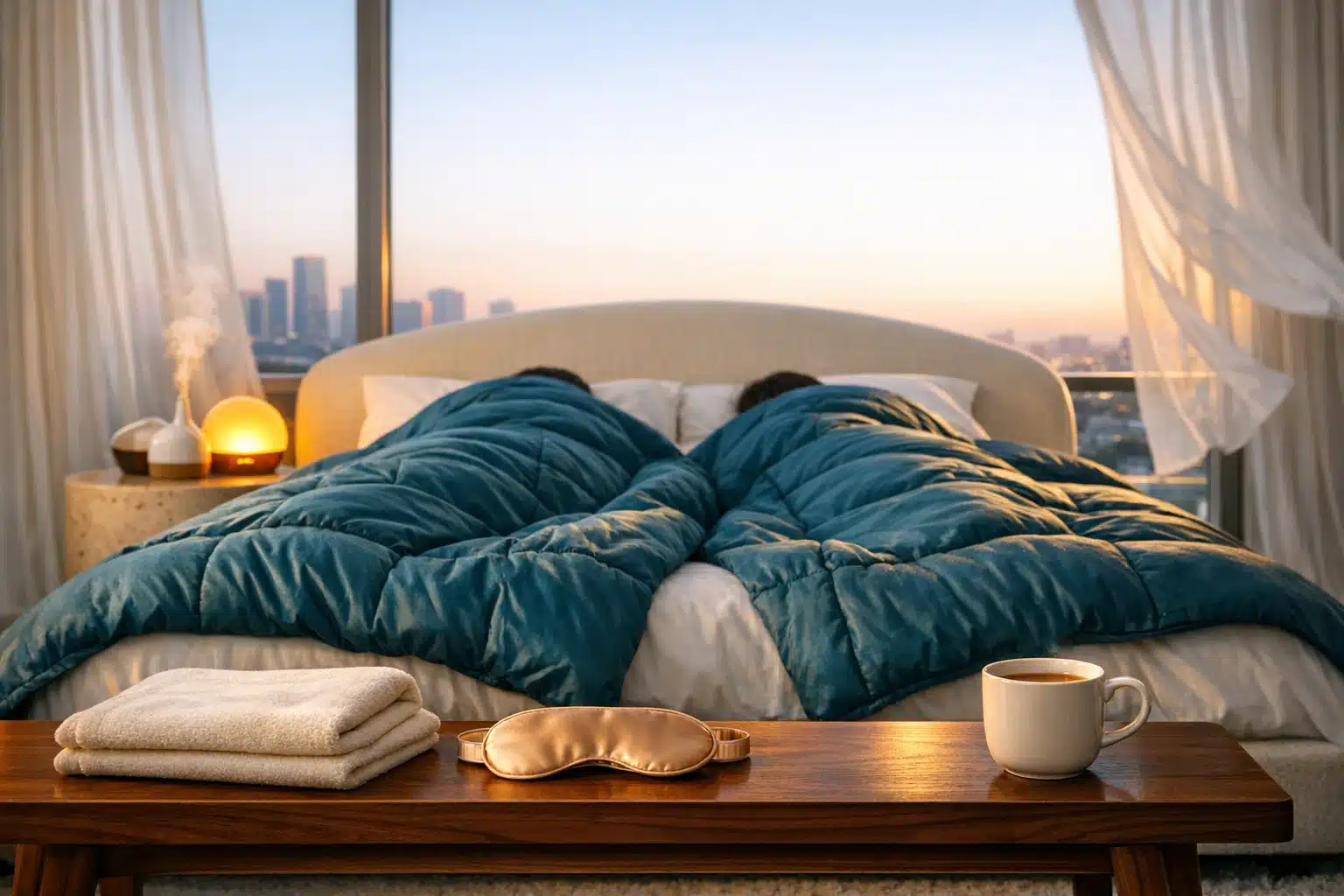
A weighted blanket is designed to apply gentle, even pressure across the body, an effect often described as grounding or cocooning. Many users report that this kind of pressure feels calming, particularly during wind-down time. For couples, however, the details matter. A single oversized weighted blanket may sound romantic, but it is not always practical because weight can shift unevenly through the night. In many cases, two individual weighted blankets work better than one shared piece. Materials also make a real difference: cotton and cooling bamboo blends may feel better for warm sleepers, while plush covers suit colder rooms. Buyers often hear the suggestion to choose a blanket that is around 7 to 12 percent of body weight, but comfort and safety should guide the final decision. People with certain circulation, breathing, or mobility concerns should check with a clinician before using one. In comparison with ordinary throws, weighted blankets are less flexible but far more purposeful; they are for deliberate rest, not casual decoration.
The sunrise alarm clock addresses a different part of the sleep equation: how the day begins. Instead of a harsh sound in total darkness, these clocks gradually brighten over 20 to 30 minutes, simulating dawn and helping the body wake more gently. This feature can be useful for couples with early work commitments or winter mornings that feel stubbornly dim. Some models add nature sounds, dusk modes, and dim amber night lighting. If one partner reaches for the snooze button out of habit, a gradual light cue may reduce the shock of waking and make mornings less abrupt for both people. In a side-by-side comparison, the weighted blanket supports the end of the day, while the sunrise alarm helps repair the beginning of it. One encourages stillness; the other creates a softer launch. Together, they can bookend a healthier routine. If your relationship is currently losing energy to late nights and rough mornings, this pair may offer more value than many trendier gadgets because it works at the level of rhythm, not just comfort.
Calming the Room: Ultrasonic Diffusers and White Noise Machines
Sometimes relaxation begins before a gadget even touches the body. It starts in the room itself: the smell in the air, the texture of silence, the sense that the day is no longer rushing through the walls. For couples, environmental wellness tools can be surprisingly powerful because they help create a shared signal that says, “Work is over, now we slow down.” Two of the most useful gadgets in this category are the ultrasonic diffuser and the white noise machine.
An ultrasonic diffuser disperses a fine aromatic mist created from water and a small amount of essential oil. Its appeal is simple: it changes the mood of a space quickly without demanding much effort. Soft lighting, a low hum, and a familiar scent can make a bedroom or living room feel more intentional within minutes. Lavender, bergamot, cedarwood, and chamomile are often chosen for evening use, though scent preference is deeply personal. That is why couples should treat fragrance as a shared design decision, not a solo indulgence. If one person loves strong floral oils and the other prefers cleaner, woodier notes, the best compromise may be lighter concentration rather than stronger scent. When comparing diffusers, focus on tank size, auto shutoff, timer settings, ease of cleaning, and noise level. A diffuser is not a true humidifier, so it should not be bought for humidity performance. It is best understood as an atmosphere tool. Also, using too much oil can make a room feel heavy rather than calm, and households with pets should verify which oils are considered safer around animals.
The white noise machine complements the diffuser by managing sound rather than scent. In homes where street traffic, neighbors, appliances, or mismatched sleep schedules interfere with rest, sound masking can make a noticeable difference. Some machines offer white noise, pink noise, brown noise, rainfall, fan sounds, and ocean tracks. These are not all identical: white noise is brighter and more static, pink noise tends to sound softer, and brown noise often feels deeper. Many couples discover that one partner prefers a fan-like sound while the other likes rainfall, so adjustable tone options matter. Compared with playing sleep sounds through a phone, a dedicated machine is usually better because it avoids notifications, battery anxiety, and the temptation to keep scrolling. In a practical comparison, the diffuser shapes emotional atmosphere while the sound machine protects auditory space. One works through association, the other through consistency. Together, they can transform a bedroom from a catch-all space into a quiet harbor. That change may sound small, but small sensory improvements are often what make evening routines repeatable. A calm room should not feel staged; it should feel like the room itself has learned how to exhale.
Warmth and Water: Foot Spas and Heating Pads for Everyday Relief
If massage tools work like focused interventions and sleep gadgets work like long-range support, heat and water devices sit comfortably in the middle. They are immediate, sensory, and easy to enjoy together. For couples who come home with tired feet, stiff shoulders, or cold hands after commuting, standing, training, or simply living through a stressful week, these gadgets can turn an ordinary evening into something softer. Two especially practical options are the foot spa bath and the heating pad.
A foot spa bath is more than a plastic tub with bubbles. The better models maintain warm water temperature, include massage rollers or textured bases, reduce splash, and offer enough depth for real soaking. This matters because many cheaper units feel enjoyable for five minutes and inconvenient after that. For couples, the main question is not whether a foot bath is relaxing, but whether it fits the space and cleanup habits of the home. If storage is limited or neither person wants to empty and dry a bulky unit, the gadget may become a once-a-season purchase instead of a weekly ritual. Still, when used consistently, a foot spa can be one of the most satisfying evening tools because it combines warmth, stillness, and a natural pause from screens. Some couples add Epsom salt, though the gadget itself is the main benefit, not the salt. In comparison with a standard basin, an electric foot spa offers better temperature stability and a more intentional experience, which makes it easier to repeat.
The heating pad is the simpler counterpart, and that simplicity is part of its strength. Whether used on the lower back, shoulders, abdomen, or neck, gentle heat can help ease feelings of tightness and create a strong signal for the body to unwind. Many electric models include several heat settings, machine-washable covers, and automatic shutoff, which is an important safety feature. There are also weighted heating pads that contour more naturally to the body, plus microwaveable versions for people who want to avoid cords. Marketing sometimes leans heavily on terms like “infrared” or “deep therapeutic technology,” but the most meaningful differences are usually practical: size, fabric feel, how evenly heat is distributed, and whether the pad stays in place. In a direct comparison, the foot spa is more immersive and ritualistic, while the heating pad is faster and easier to use during daily life. One says, “Let’s stop for twenty minutes.” The other says, “We can still relax even on a busy night.” For couples, this makes them a smart pair. One is ideal for planned unwinding; the other quietly rescues a Tuesday. Comfort often grows not from grand gestures but from repeatable ones, and warm tools are among the easiest to revisit.
Screen Recovery and Shared Wind-Downs: Eye Massagers, Breathing Devices, and Final Takeaways
Many couples now end the day in a familiar glow: laptops closed, phones still in hand, minds not quite ready to land. That is why the final category of wellness gadgets is not about luxury as much as transition. These are tools that help the body switch modes. Two gadgets stand out for this purpose: the heated eye massager and the guided breathing device or meditation lamp.
A heated eye massager is designed to address the particular kind of fatigue created by modern routines: screen exposure, facial tension, and the subtle exhaustion of focusing all day. Most models combine gentle warmth with air compression, vibration, or built-in audio. The experience is part spa mask, part portable quiet room. For couples, this can work surprisingly well because it creates a short, device-assisted pause without requiring either person to be especially skilled at meditation. It is useful after long work sessions, travel days, or evenings filled with streaming and scrolling. When comparing eye massagers, prioritize adjustable pressure, a comfortable fit, washable contact surfaces, and the option to turn off sound effects if they feel gimmicky. Foldable designs are easier to store, which increases the chance of regular use. That said, this gadget is not for everyone; people with certain eye conditions, recent eye procedures, or sensitivity to compression should seek guidance before using it. Compared with a simple warm compress, the eye massager offers more structure and convenience, but the basic principle remains the same: reduce stimulation and invite rest.
The guided breathing device or meditation lamp serves a different role. Instead of acting on muscle or heat, it provides pacing. Some versions glow brighter and dimmer to guide inhale and exhale timing. Others use vibration or visual cues linked to an app. The benefit is not that the device performs relaxation for you, but that it makes slowing down easier to follow. In moments of stress, people often know they should breathe more steadily, yet the body ignores the instruction. A paced cue solves that problem. Slow breathing practices are commonly associated with lower perceived stress and a calmer state in the moment, especially when done consistently. For couples, the real advantage is shared rhythm. Sitting side by side and following the same light pattern for five minutes may sound almost too simple, but simple routines are often the ones that survive busy lives. If the eye massager is a retreat, the breathing device is a reset.
For couples deciding where to start, the best strategy is not to buy all ten gadgets at once. Choose one item that improves sleep or routine, and one that adds immediate comfort after a long day. A weighted blanket plus a heating pad, or a sound machine plus a massage pillow, often delivers more lasting value than an expensive pile of underused gadgets. Focus on noise level, ease of cleaning, storage, and whether both people will realistically enjoy the device. The strongest wellness products are not the ones that promise transformation. They are the ones that quietly help two people feel a little calmer, a little kinder, and a little more connected at the end of the day.